


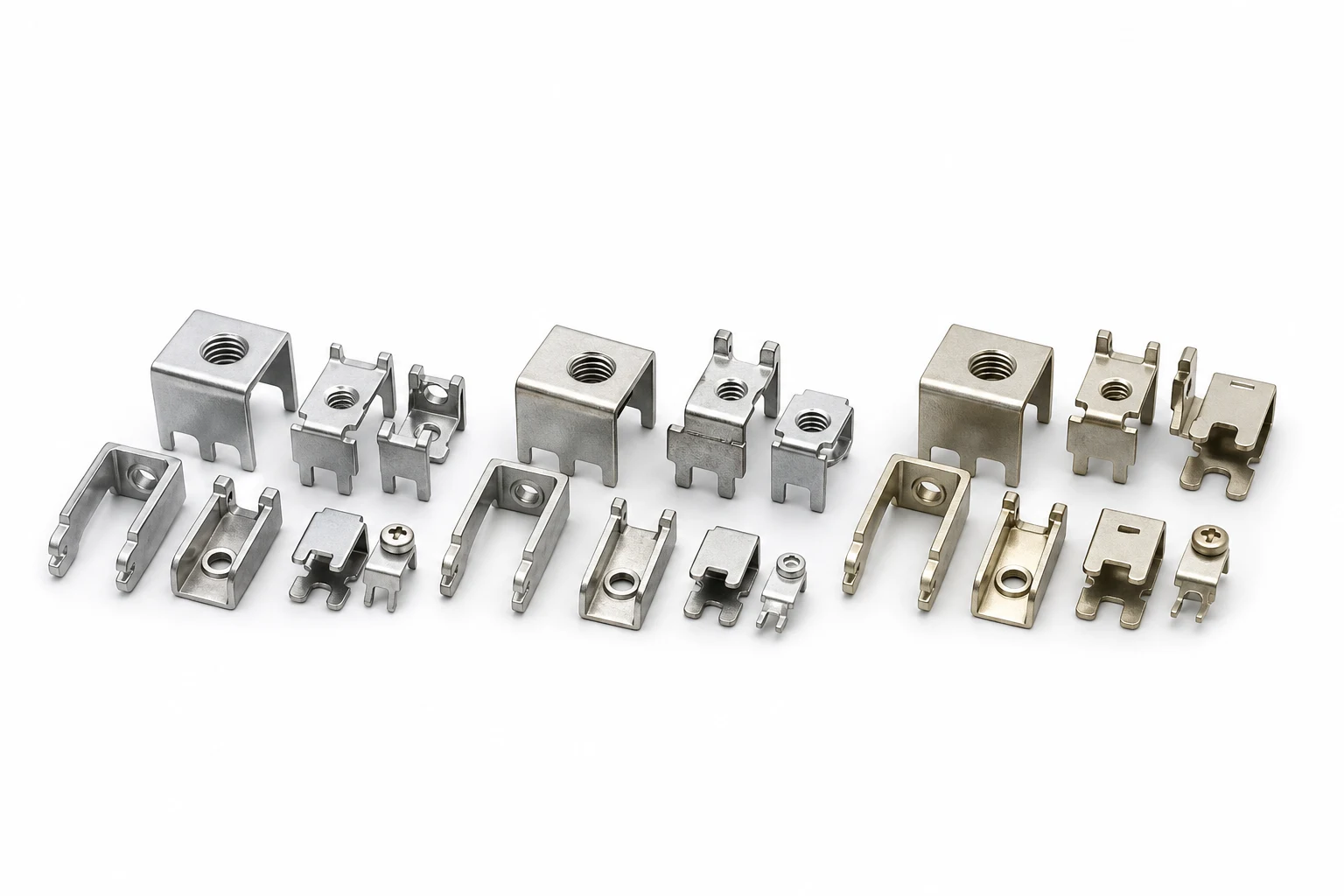
Quick answer: Terminal plating for automotive power modules must balance solderability, contact resistance, temperature, humidity, salt spray and storage life.
Questions answered on this page
- Should automotive power-module terminals use tin, nickel or silver plating?
- How does plating affect contact resistance and temperature rise?
- What do salt spray, humidity and storage life change?
Engineering summary
- Tin supports solderability, nickel supports temperature and wear resistance, and silver supports low contact resistance.
- Separate the soldering area, contact area and mechanical fixing area before specifying plating.
Separate plating functions
A welding terminal has soldering areas, contact areas and mechanical fixing areas. Tin is often chosen for solderability, nickel for temperature and wear resistance, and silver for low contact resistance. Review the welding terminal category for standard options.
Plating table
| Plating | Strength | Check |
|---|---|---|
| Tin | Solderability | Oxidation and storage |
| Nickel | Temperature and wear | Wetting |
| Silver | Low contact resistance | Cost and sulfide risk |
Checklist
- Measure contact resistance after soldering.
- Compare before and after thermal cycling.
- Check salt-spray and humidity conditions.
FAQ
Is silver always best?
No. It offers low resistance but has cost and environmental tradeoffs.