Copper-aluminum composite conductors combine a copper surface with an aluminum core. Compare copper fraction, cross-section, joining process and service environment. Cost and weight differences depend on composition, dimensions and purchasing conditions.
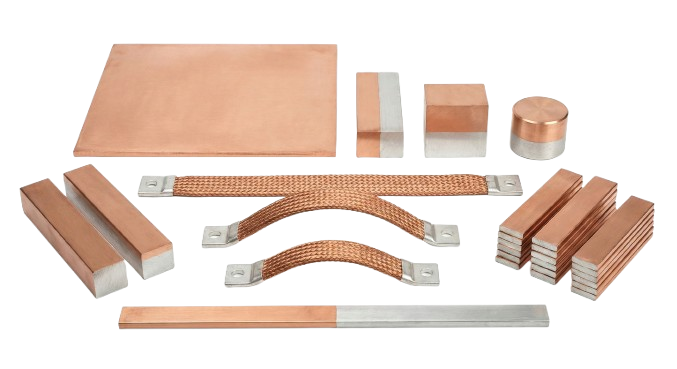
Manufactured using advanced Solid-Liquid Cast-Rolling Technology, this Copper-Aluminum Composite offers physical properties superior to traditional cladding or welding processes.
The composite process forms a copper-aluminum interface; verify interface quality with batch documentation and processing conditions.
The interface affects bonding and conductivity. Confirm layer thickness and microstructure from the specific material documentation.
Rounded edges for better fit with insulation materials, suitable for high-end busbar processing.
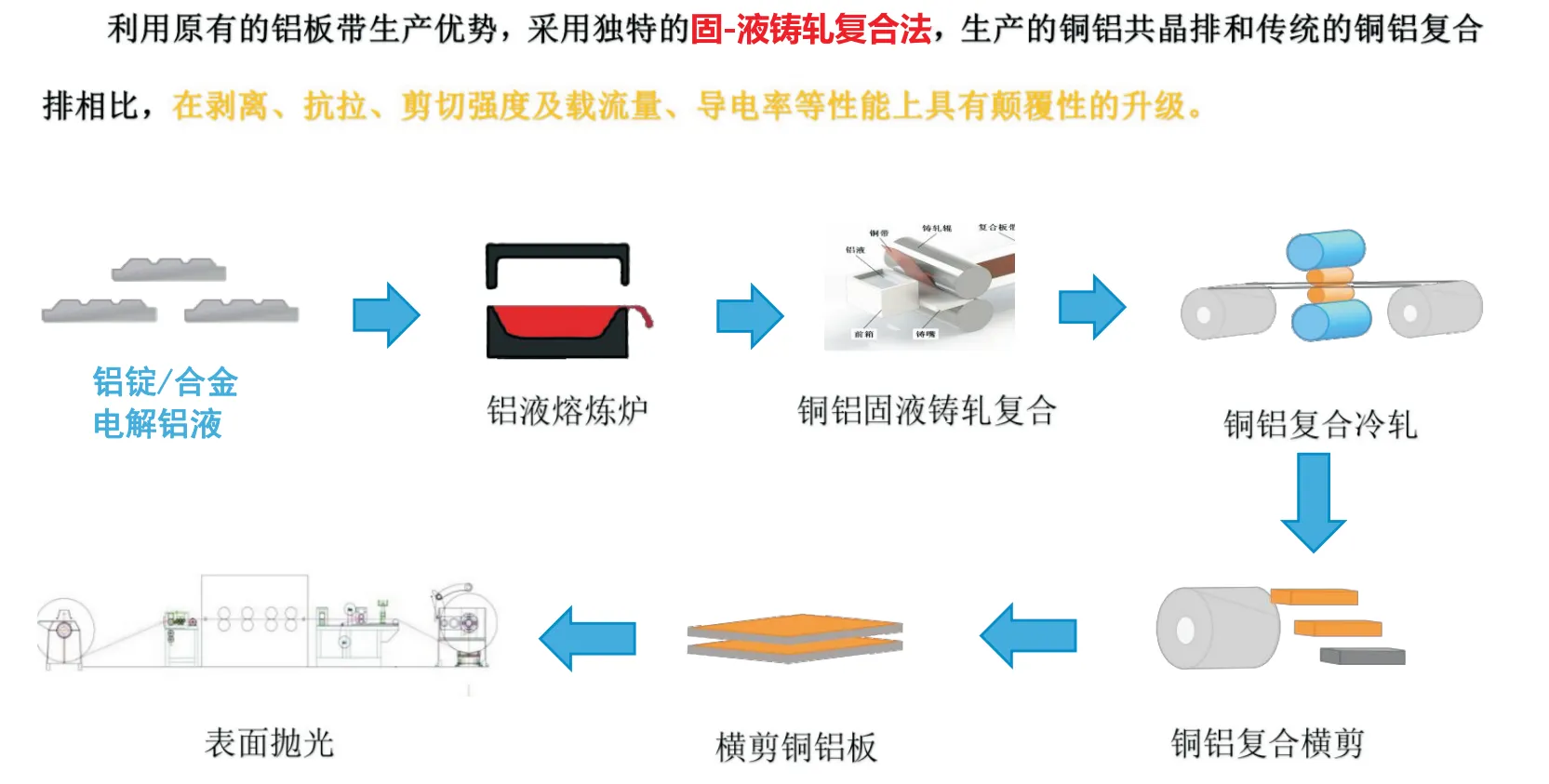
Process Principle: Solid-Liquid Cast Rolling Flow
Compared to traditional CCA (mechanical cladding/welding) and pure copper busbars, Solid-Liquid Cast-Rolling Cu-Al Eutectic Busbar offers significant advantages in bonding strength, processability, and cost-efficiency.
| Dimension | Pure Copper (T2/T3) | Traditional CCA (Clad/Weld) | Solid-Liquid Cast-Rolling Eutectic Busbar |
|---|---|---|---|
| Bonding Method | - | Mechanical/Weak Metallurgical | Atomic Metallurgical (Eutectic) |
| - | Low (Prone to delamination) | > 148 N/mm (Very High) | |
| Processability (Bending) | Excellent | Poor (Cracks/Peeling) | Excellent (90° No Cracks) |
| Conductivity (IACS) | ~100% | 65% - 85% | Customizable by Cu ratio |
| Density | 8.9 | ~3.5 - 4.5 | 3.94 (Lightweight) |
| Overall Cost | High | Medium | Low (40%+ savings vs Cu) |
* Note: Data based on typical values; specific performance depends on customization.
The following values are retained from the existing material page as references. Report IDs, specimen details and complete test conditions are not provided here, so these are not guaranteed values for every batch. Confirm model-specific documents and acceptance criteria before design or purchase.
| Test Item | Page Reference (Verify Documents) | Notes |
|---|---|---|
| Interface Peel Strength | > 148 N/mm | Confirm specimen, peel method and report |
| Shear Strength | > 63.6 N/mm | Stable and reliable structure |
| Tensile Strength | > 136 N/mm² | Excellent mechanical strength |
| Bending Performance | 90° No Cracks | Suitable for complex busbar bending |
| DC Resistivity | ≤ 0.02350 Ω·mm²/m | Confirm temperature and measurement conditions |
The current and weight references below lack complete ambient, orientation, cooling and copper-fraction conditions. Use them to discuss specifications, not to assign a design current rating.
Single/Double-sided Cu customization. Thickness 1.5-12mm, Width up to 800mm.
| Spec (mm) | Page Reference (Listed at 50K Rise) | Weight vs Copper |
|---|---|---|
| 40 x 4 | ~468 A | 44% |
| 50 x 5 | ~635 A | 44% |
| 60 x 6 | ~903 A | 44% |
| 100 x 10 | ~1800 A | 44% |
We provide sample testing and selection support for this composite material.
Contact Us →