


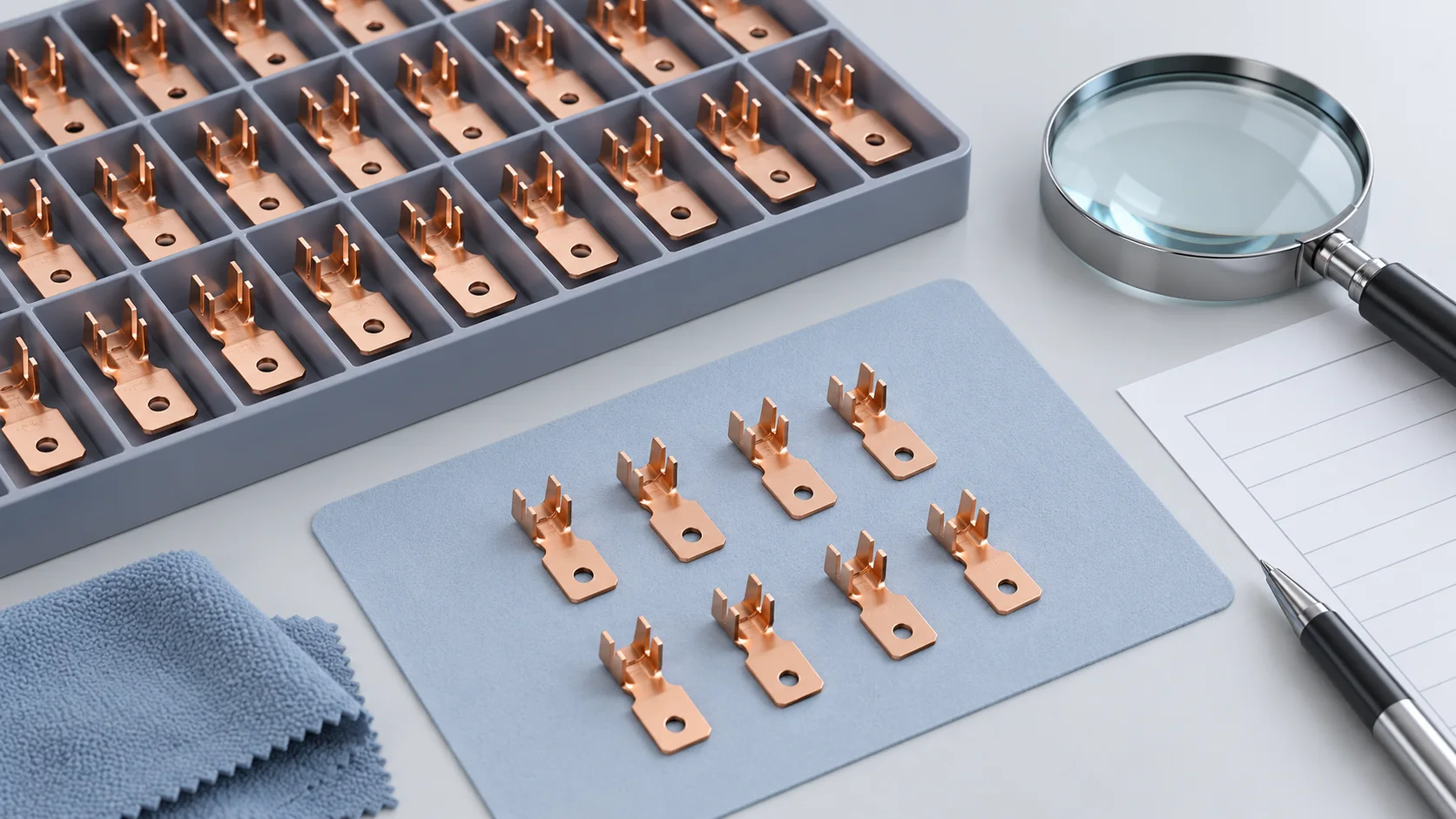
Direct answer Passing AQL inspection means that a lot was accepted under the agreed sampling scheme. It does not certify zero defects throughout the lot. Even with a zero acceptance number, undetected nonconforming items may remain outside the sample. Record the plan and findings rather than claiming every part passed inspection.
Keep three quantities separate
| Item | Meaning | Misinterpretation to avoid |
|---|---|---|
| AQL | Acceptance quality limit indexing a continuing-lot sampling scheme | A guaranteed maximum defect percentage in every lot |
| n | Number of sample items inspected | An undefined instruction to inspect 1% |
| Ac or c | Acceptance number under the specified counting rule | Zero acceptance means zero defects in the lot |
ISO's official listing identifies ISO 2859-1:2026 as published in January 2026. When adopting the scheme, specify the contractual edition, inspection level, current inspection state and switching rules. This article does not reproduce its sampling tables or select one AQL for all busbars and stamped terminals.
A zero-acceptance illustration
The following example is not an ISO table selection. Assume a lot much larger than the sample, random selection and an approximately fixed nonconforming fraction p. For n=80 and c=0, the approximate probability of finding no nonconforming item is Pa=(1−p)80.
| Assumed true nonconforming fraction | Approximate probability of zero findings in 80 |
|---|---|
| 1% | 44.8% |
| 5% | 1.65% |
These are binomial calculations. Use an appropriate finite-lot model when sampling without replacement takes a substantial part of a small lot. Neither the sample size nor the zero-acceptance rule should be copied into a specification without risk assessment. The example does not estimate the actual defect rate of an inspected shipment.
Make stamped-part inspection executable
Define lot boundaries, including material, plating batches and production changes that matter to quality. Select samples randomly using the agreed method, not just from the top of a package or from supplier-selected presentation samples.
Define how excessive burrs, out-of-tolerance hole positions and coating issues are classified. If a part has two problems, are you counting nonconforming items or individual nonconformities? Do not mix those bases. Critical functional or safety characteristics need their own risk assessment, not automatic use of a cosmetic-inspection plan.
Keep the lot ID and quantity, drawing revision, defect classes, inspection state, sample size, acceptance and rejection criteria, measurement records, decision and disposition. Follow agreed resubmission rules rather than repeatedly drawing new samples until one passes.
Common questions
Does first-article approval remove incoming inspection? First-article approval and lot acceptance have different purposes. Any reduced inspection needs the agreed scheme and continuing evidence.
Is “AQL 1.0” sufficient? Lot size, inspection level, plan, classification, counting basis and inspection state are also needed.
Related products and reading
Explore related products · First-article inspection records · Send drawings and application conditions
Sources
- ISO 2859-1:2026
- NIST, Lot Acceptance Sampling Plans
- NIST, Choosing a Sampling Plan with a Given OC Curve
Sources checked on 6 October 2026. Worked examples explain methods, not HC-SP product ratings or test results. Cover is an AI-generated engineering illustration, not an actual product photograph.