


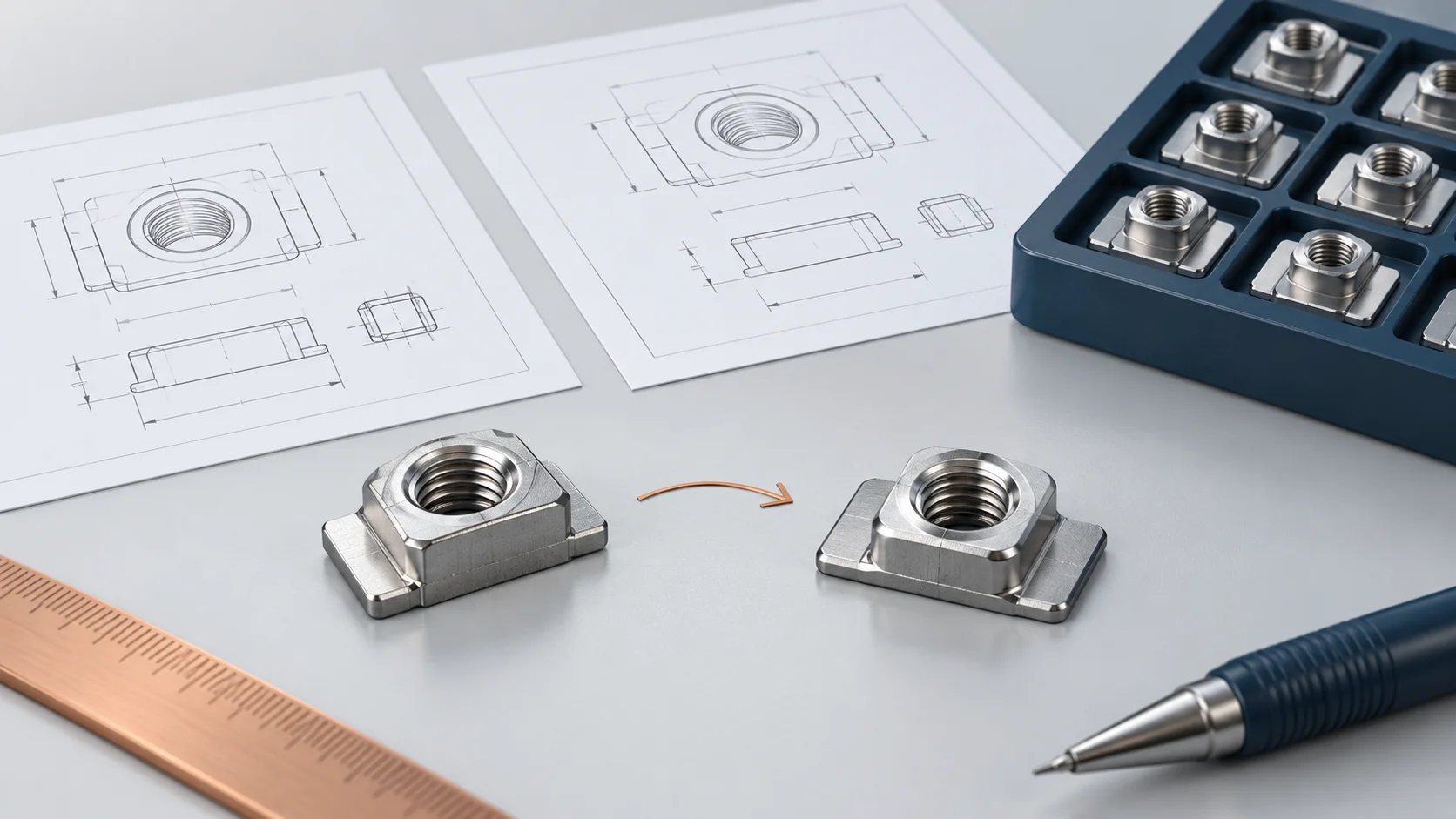
When an SMT nut product or process change notification arrives, identify affected part numbers, drawing differences, effective lots and existing inventory. Define requalification and release through the project process. An unchanged part number does not independently show that the original first-article approval covers every new condition.
Map the notice to the purchased item
Würth Elektronik publishes a PCN process for electronic and electromechanical components. Its handbook includes affected order codes, dates, change descriptions, qualification summaries and data-sheet changes. These fields are useful references for an SMT nut review. External notification periods and acceptance terms do not establish Hongchuan policy.
A practical first step is to match customer part number, supplier number and drawing revision. For a notice covering multiple items, identify each active use and associated stock. Distinguish a product/process change notice from a PTN discontinuation notice before deciding the next action.
| Example change | Suggested evidence | Risk-based review |
|---|---|---|
| Base material or temper | Old and new specifications and lot evidence | Forming, threads and assembly suitability |
| Surface finish | Full coating stack and thickness requirements in micrometres | Finished threads, soldering and contact use |
| Tooling or manufacturing site | Affected dimensions, process and sample lots | Critical dimensions and first-article results |
| Tape or packaging | Orientation drawing, pocket dimensions in mm, pickup face | Feeding, placement and traceability |
| Document clarification | Revision comparison and impact statement | Whether physical product changes |
Choose checks from the actual difference
The table proposes review directions; the project determines tests and sample sizes. A finish change may need thread and soldering checks as well as appearance review. A packaging orientation change calls for feeding and placement confirmation. Document-only edits do not automatically require every test, while an unchanged overall size does not resolve all change-specific risks.
For surface mount nuts, associate old and new samples, drawings and results with one approval record. Thread inspection is discussed in SMT nut GO/NO-GO gauge checks. Reports should identify the actual changed lot.
Record the transition beyond its date
A useful change record separates notice date, intended implementation and first delivered lot. Use a stated date format and time zone, then link lot identification to packaging, inspection and issue-to-production records. If both versions may coexist, document their identification, permitted orders and the end of that arrangement. If mixing is prohibited, approve segregation and stock disposition.
Actual Hongchuan notice periods, responsibilities, costs and delivery arrangements depend on confirmed agreements. This article provides a purchasing method rather than an unverified company change policy.
Questions
Does receipt of a PCN authorize production? Define receipt, technical review and release separately in the controlled process and agreement.
Why retain lot boundaries when the part number stays the same? A stable part number cannot alone identify the transition between old and changed supply.
Sources
Würth Elektronik PCN process;Würth Elektronik PCN/PTN Handbook.
The cover is an AI change-review illustration, not an actual Hongchuan PCN, product model or validation record.