


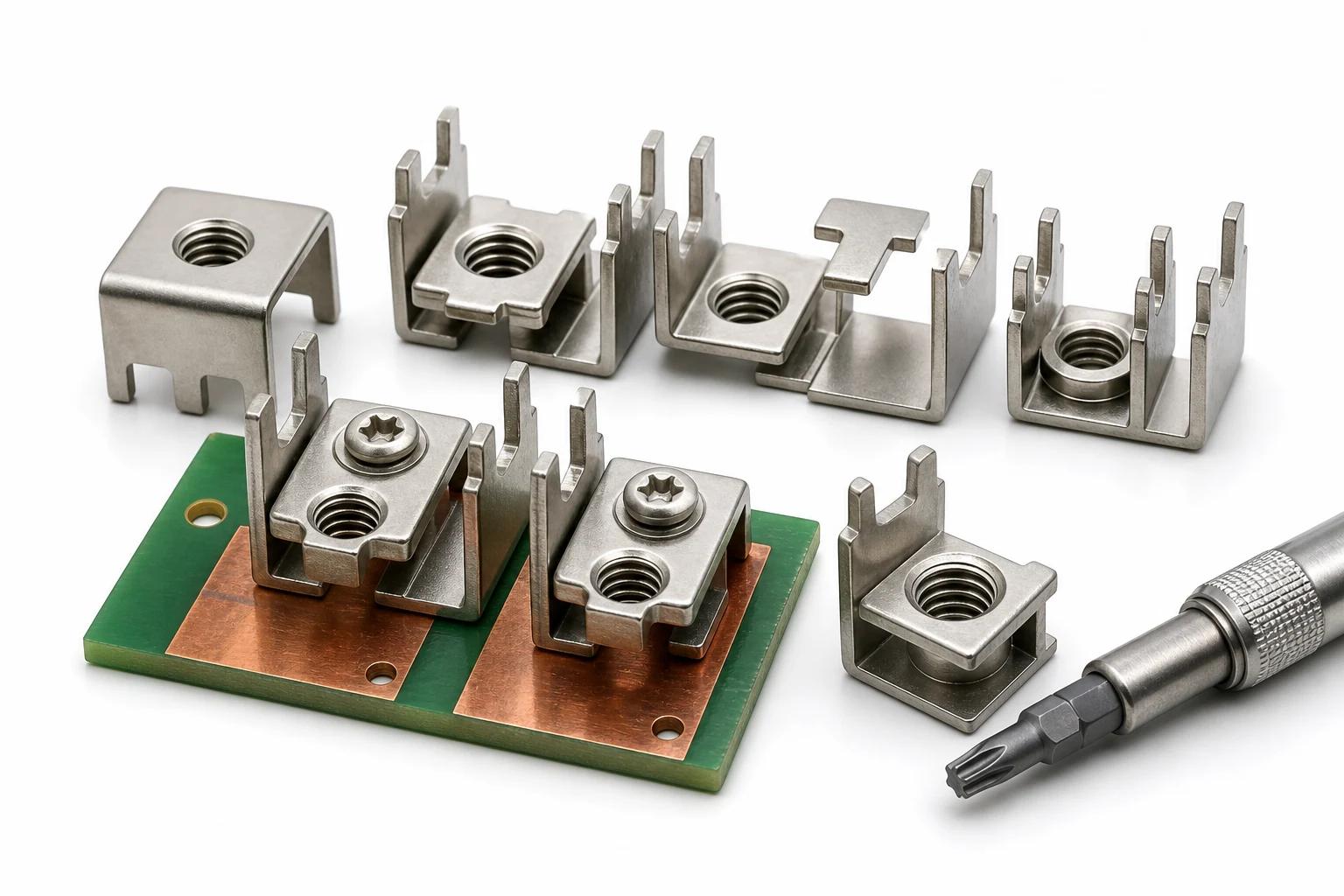
Quick answer: Terminal loosening after thermal cycling is not just a torque issue. Check thermal expansion mismatch, solder fatigue, fretting, thread engagement, plating change and cable pull force together.
Questions answered on this page
- Why do high-current PCB terminals loosen after thermal cycling?
- Is higher torque enough to solve it?
- How are contact resistance, blackening and solder cracks related?
Engineering summary
- Thermal-cycling loosening is usually a combined effect of expansion mismatch, solder fatigue, fretting and cable pull.
- Measure torque retention, milliohm-level contact resistance, temperature rise and solder-joint condition together.
Why terminals loosen
During high-current operation, a PCB welding terminal, solder joint, copper area and screw heat and cool at different rates. Repeated cycles can create micro-cracks around the solder joint and reduce real contact area at the fastening interface. Once contact resistance rises, the terminal heats more and loosening accelerates.
Failure table
| Symptom | Likely cause | Check |
|---|---|---|
| Torque loss | Thread or contact surface deformation | Retorque and inspect thread engagement |
| Dark terminal | High contact resistance | Thermal image and milliohm test |
| Solder crack | Thermal fatigue or cable pull | Microscope or cross section |
Improvement checklist
- Relieve cable pull force.
- Check contact material and washer stack.
- Measure contact resistance before and after thermal cycling.
- Review terminal geometry with the high-current PCB hardware guide.
FAQ
Should torque simply be increased?
No. Excess torque can deform the terminal or damage solder joints.
What should be measured after cycling?
Torque retention, contact resistance, solder cracks and copper discoloration.