


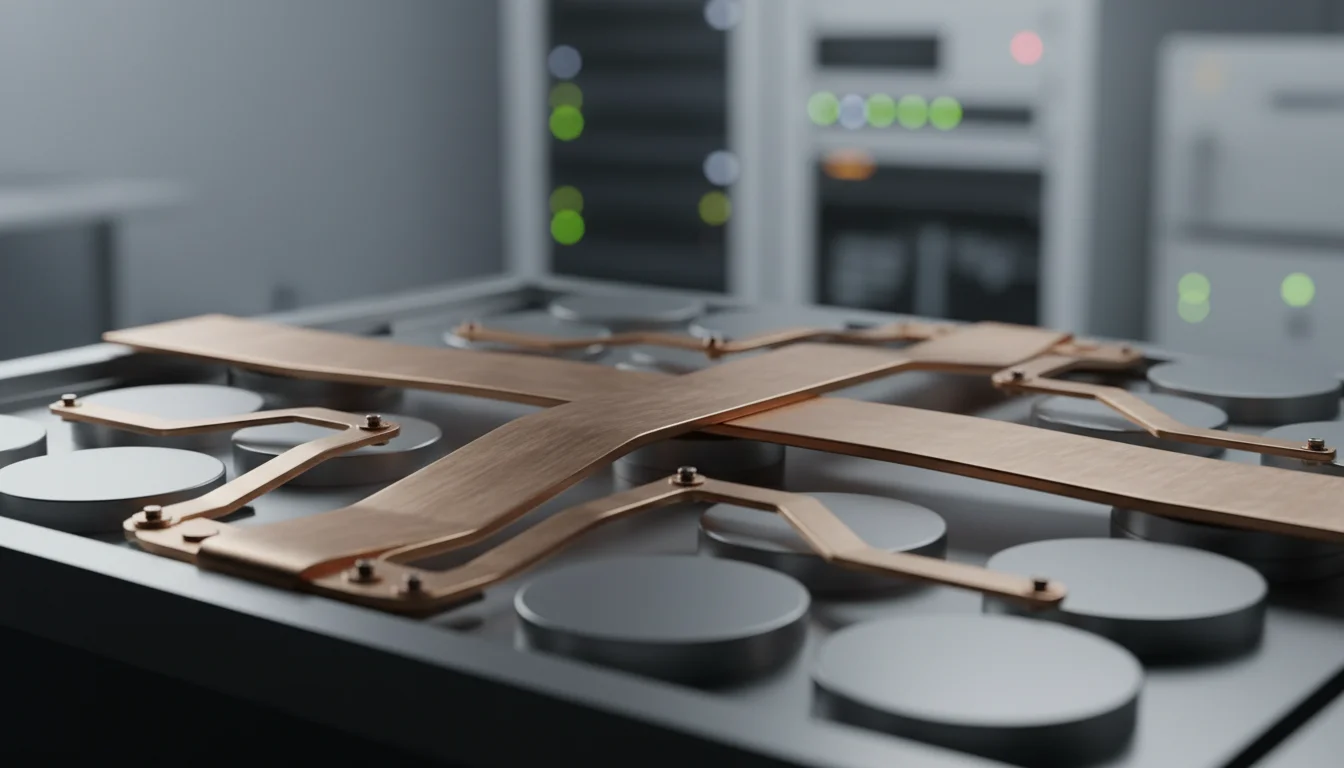
How Cell-to-Pack (CTP) Designs Are Reshaping Interconnect System Costs in 2026
Direct Answer: By 2026, Cell-to-Pack (CTP) architectures are projected to reduce interconnect system BOM costs by 15-25% by eliminating intermediate module housings. This shift drives a transition from manual bolting to automated SMD Busbars and direct Welding Terminals, prioritizing high-speed assembly and structural integration.
The Evolution: From Modular to Integrated Interconnects
As the EV industry matures into 3rd-generation CTP technology, the traditional "Cell-Module-Pack" hierarchy is being streamlined into a direct "Cell-Pack" structure. For interconnect systems, this means the disappearance of module-to-module high-voltage cables and connectors, replaced by long-format, integrated busbar systems.
To accommodate this high level of integration, manufacturers like HC-SP recommend solutions compatible with SMT (Surface Mount Technology). For instance, utilizing SMT Nuts allows engineers to use the PCB itself as a structural backbone for current collection, significantly reducing the reliance on discrete wiring harnesses.
Cost Analysis: Traditional Modules vs. CTP Architecture
The table below outlines the critical cost and performance differences between traditional modular designs and 2026-standard CTP architectures. Data is based on industry averages and HC-SP engineering case studies.
| Parameters | Traditional Module Design | CTP Design (2026 Standard) | HC-SP Solution Benefit |
|---|---|---|---|
| Component Count | High (Housings, cables, connectors) | Low (~40% reduction) | Integrated Precision Stamping parts |
| Assembly Method | Manual/Semi-auto Bolting | Automated Laser Welding / SMT | Tape & Reel Packaging for Automation |
| Volumetric Efficiency | 40% - 50% | 60% - 75% | Low-profile SMD Busbars |
| Interconnect Cost | Baseline (100%) | 20% - 30% Savings | Check with Price Calculator |
Critical Interconnect Components for 2026
In CTP designs, the reliability of interconnects is paramount. With the removal of module housings, connection points must withstand higher vibration and thermal stress.
- Rigid-Flex Busbars: To absorb displacement caused by cell swelling, CTP designs heavily utilize flexible connections. HC-SP copper busbars leverage Precision Stamping to ensure structural integrity under high current.
- SMT Automated Components: To match the high Takt Time of battery lines, PCB Welding Terminals must support pick-and-place and reflow soldering, offering 5x the efficiency of manual screw locking.
- Compliance Standards: All interconnect designs must adhere to strict safety standards such as UL 2580 (Batteries for Use in Electric Vehicles) and IEC 60664 (Insulation Coordination).
Estimating Your Project Savings
Transitioning to CTP requires a re-evaluation of supply chain costs. For Tier 1 suppliers aiming to stay competitive in 2026, leveraging automation-compatible components is key.
You can use our online tool to estimate potential cost differences: Try the Price Calculator. Additionally, for complex CTP busbar designs, refer to our Selection Guide for expert advice on current carrying capacity and thermal management.
Next Steps
CTP technology is redefining the physical structure and cost logic of battery packs. If you are developing next-generation battery systems, contact HC-SP for automation-ready samples.