


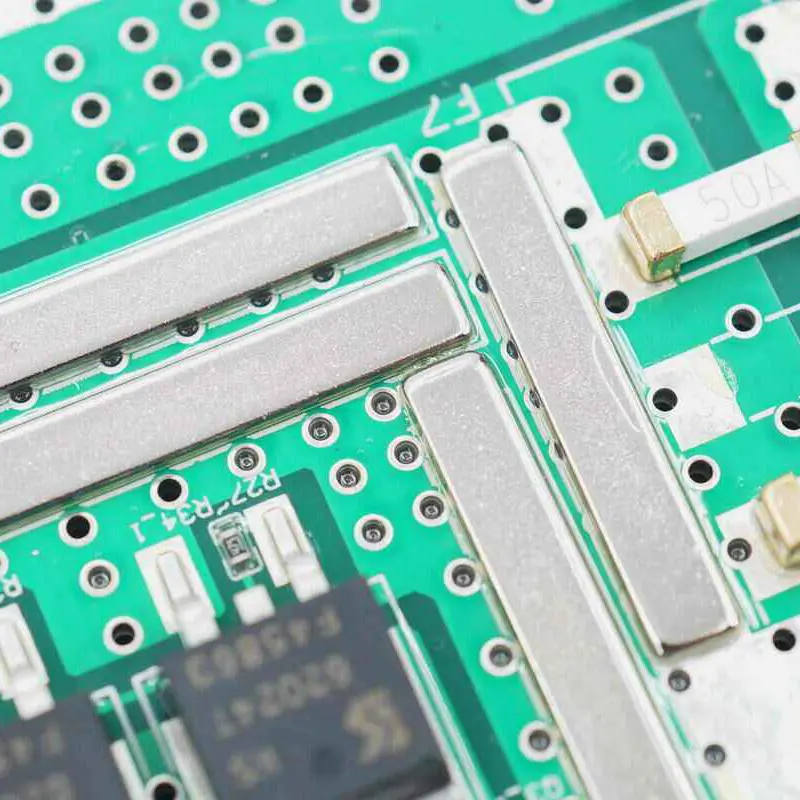
Inside a UPS DC distribution system, a busbar often deserves earlier consideration than simply larger cables or temporary transition parts when the project wants clearer fixed high-current short paths, distribution nodes, and service interfaces. The real selection issue is not one single dimension. It is whether that section serves as a main path, a distribution node, or a service transition, and whether the structure allows stable assembly.
For projects that care about UPS distribution path, temperature-rise control, and maintenance convenience at the same time, it helps to review the SMD busbar page, applications page, and support page together. That makes it easier to judge material, section, and assembly method inside one framework instead of choosing only from current value.
Why UPS DC distribution positions often need busbars
Inside UPS and backup-power systems, the design usually has to manage fixed high-current short paths while also respecting structural parts, tolerances, and service access. In those positions, the advantage of a busbar is that it locks conductive path, mounting direction, and structural fit together instead of leaving the problem to later wiring steps.
- Useful for shortening fixed high-current short paths inside the UPS.
- Useful for making the distribution relationship easier to review and maintain.
- Useful for production programs that need assembly consistency and service access.
- Useful for evaluating conductive path together with structural tolerances.
Which positions deserve UPS distribution busbars first
| Application point | Why a busbar fits better | Main design focus |
|---|---|---|
| DC input to distribution-node transition | The path is fixed and can become a clear, stable conductive structure | Section size, spacing, and mounting direction |
| Short-distance high-current UPS distribution | Helps separate the main path from the distribution relationship more clearly | Temperature rise, structural fit, and service space |
| High-current short path near protection parts or capacitors | Allows the fixed conductive path and maintenance position to be managed separately | Heat spreading, load path, and nearby part space |
When terminals or wire harnesses should stay in place
If a section behaves more like an interface transition, a terminal is usually the more natural fit. If the connection distance is longer, needs flexible routing, or includes more service movement, a harness is usually more practical. A busbar is strongest when it handles fixed high-current short paths and clear distribution nodes instead of replacing every connection type.
| Approach | Best role | Main caution |
|---|---|---|
| Busbar | Fixed high-current short paths, distribution nodes, and short transitions | Section size, temperature rise, and structural space need early review |
| Terminal | Interface transition points and external-conductor entry positions | Better for interface management, not always for the full main path |
| Wire harness | Longer connections, flexible routing, and positions with more service movement | More flexible, but space use and assembly consistency still need review |
Five questions to answer before selecting
1. Does this section serve as part of the main path or mainly a distribution transition
If the busbar carries part of the main path, section size, contact area, and temperature rise need to be judged together. If it mainly handles a distribution transition, structural fit and mounting direction remain just as important.
2. Are temperature rise and heat-spreading paths clear enough
UPS interiors are usually dense, and heat accumulates in limited space. Beyond conductivity, the design also needs to review whether the busbar section, contact region, and nearby structure support effective heat spreading.
3. Are structural clearance and service space sufficient
UPS equipment often needs inspection, replacement, and reassembly later in its life. If tool access, disassembly order, and service reach are not reviewed early, a fixed short path can become a maintenance obstacle later.
4. Do material and surface finish match the project target
Different projects balance conductivity, weight, cost, and environmental fit differently. Material and surface finish should not be chosen only by habit. They should follow the real conductive path, manufacturing method, and environmental condition.
5. Does the project prioritize consistency or adjustment freedom
Once the project becomes production-oriented, a busbar helps standardize fixed paths and assembly rhythm. If structure and layout still change often, other connection methods may still be easier to adjust temporarily.
A more practical decision sequence
- Separate the main path, distribution node, and service interfaces first.
- Confirm which positions need fixed short paths and which need flexible movement.
- Evaluate temperature rise, structural tolerance, and assembly path together.
- Then compare material, surface finish, and manufacturing method.
FAQ
Does every UPS internal connection need a busbar?
No. If the path is short and the structure is simple, other connection methods may still work. But when the project values fixed high-current paths, temperature-rise control, and production consistency, a busbar usually deserves earlier priority.
Can a busbar replace every terminal and harness?
No. A more practical and common approach is to let the busbar handle fixed short paths, terminals handle interfaces, and harnesses handle flexible connections.
What is easiest to miss in this type of project?
The easiest miss is delaying temperature-rise review and service-space review. Many concepts work electrically on paper but expose structural issues during assembly and maintenance.
Conclusion
Selecting a busbar for UPS DC distribution is not about choosing one conductor by itself. It is about giving fixed main paths, distribution nodes, and service interfaces the connection methods that actually fit them best. Once current path, temperature rise, and assembly method are clarified early, the production solution usually stabilizes much faster.