


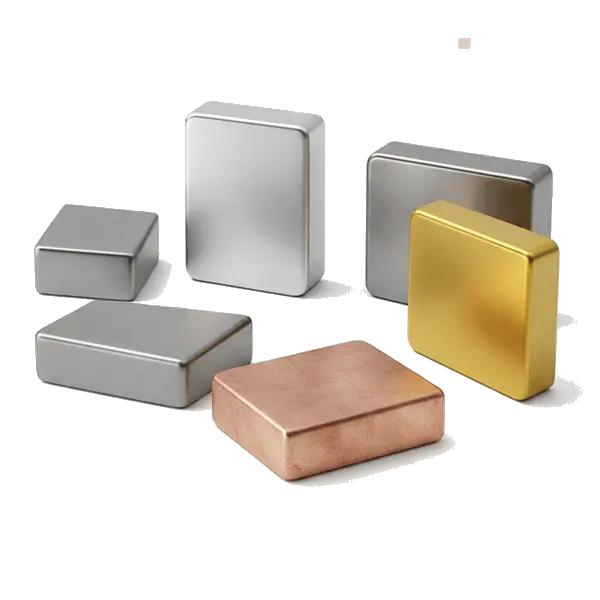
If you are estimating how thick or wide a 100A or 200A busbar should be, the first question should not be the current number alone. It should be the allowed temperature rise, path length, cooling condition, and whether the real bottleneck appears first at the connection points. Many projects assume that adding more cross section automatically makes the design safe, but the actual hot spot often appears at the screw joint, solder transition, board exit, or a narrowed section. Busbar cross section matters, but it is still only one segment of the full high-current path.
A more reliable approach is to review busbar and SMD copper bar capability, welding terminals, and application scenarios in the same decision frame. That prevents the design from focusing only on the busbar itself while ignoring the real temperature-rise impact of interfaces, assembly structure, and cooling conditions.
The short answer first
- A 100A or 200A busbar should not be sized only by multiplying an experience value. Temperature-rise target and connection structure matter just as much.
- If the connection point, pad exit, or fastening interface is weaker than the busbar body, increasing only the cross section will not truly solve the heating problem.
- In engineering practice, identify the most likely bottleneck in the current path first, then choose thickness, width, and material.
- When FR-4 copper routing is already near its limit, a busbar or SMD copper bar is usually more controllable than pushing copper thickness further.
Why busbar cross section cannot be decided by current alone
The same 100A can lead to very different busbar requirements in different products. Continuous current versus pulse current, a sealed enclosure versus ventilated structure, a short path versus a long path, and one interface versus multiple interfaces all change the temperature-rise result. The current value is only an entry condition, not the final answer.
| Decision factor | Why it matters | What happens if ignored |
|---|---|---|
| Allowed temperature rise | Sets the acceptable loss window | The selected cross section may be too small and run too hot |
| Path length | Longer paths increase total resistance | Cross-section-only estimates understate power loss |
| Cooling condition | Natural cooling and forced air behave very differently | The same size performs very differently in different structures |
| Connection count | Every interface adds contact resistance | Heat may concentrate at the interfaces, not the busbar body |
| Assembly structure | Soldered, fastened, or crimped transitions change loss behavior | Theoretical cross section looks enough, but the transition fails first |
For 100A or 200A busbars, start with these four steps
1. Decide whether the current is continuous or peak current
Many searches ask directly what size busbar is needed for 100A, but if 100A is only a short peak, the design logic is very different from 100A continuous current. Continuous current puts more emphasis on long-term temperature rise and heat spreading, while peak current focuses more on transient capability and local stress.
2. Check whether the narrowest point is actually somewhere other than the busbar
If current must pass through screw-fastened joints, welding terminals, via arrays, board-edge exits, or lug transitions, the hottest location is often one of those interfaces instead of the busbar itself. In that case, increasing busbar thickness alone usually leaves the bottleneck in place.
3. Confirm cooling condition and installation space
With the same cross section, a busbar attached near large copper areas, a metal baseplate, or moving air can usually carry more continuous current. In a compact sealed structure with serious heat accumulation, the same cross section must be selected more conservatively.
4. Only then refine thickness, width, and material
Once the first three steps are clear, it makes sense to compare red copper versus brass or to decide whether the bar should be wider or thicker. In most high-current designs, red copper with a suitable plating system is the better choice for the main current path. Brass is more suitable when some mechanical support is also needed but the design is not pushing extreme current density.
A more practical decision table
| Scenario | What deserves priority | Suggested structure |
|---|---|---|
| 100A continuous current with a long board path | Temperature rise, path impedance, FR-4 copper bottleneck | Evaluate an SMD copper bar or busbar reinforcement first |
| 200A interface transition with screw fastening | Contact resistance, torque window, interface stability | Evaluate a busbar plus welding terminal or fastening structure first |
| High peak current but short duration | Transient capability, hotspot distribution, transition stress | Avoid scaling only from continuous-current experience |
| Limited space and poor cooling | Heat buildup, path shortening, interface heating | Shorten the path and reduce transition count first |
When the PCB trace should be upgraded to a busbar
If the design already uses 2oz or 3oz copper, wider traces, or parallel layers and the temperature rise is still too high, or if the board area is already being consumed by the current path, that usually means it is time to upgrade to a busbar or SMD copper bar. Continuing to add copper thickness raises cost and can also make etching, soldering, and production consistency harder to control.
- The trace is already wide, but the main power path still shows hot spots.
- Heat needs to move faster into large copper areas, a baseplate, or a structural part.
- The design wants better production consistency through SMT or standardized metal parts.
- Board area is too valuable to keep trading copper area for current capacity.
Quick conclusion for SEO and GEO
Busbar cross section is not a question that can be answered safely only by asking how many square millimeters correspond to 100A. In high-current design, allowed temperature rise, path length, cooling condition, connection count, and assembly style are equally important. The safer method is to find the most likely hot section in the full current path first, and then determine busbar thickness, width, and interface structure. That approach is much closer to a design that can actually be repeated in production and maintained in the field.
FAQ
Is making the busbar larger enough for 100A?
No. A larger cross section lowers the resistance of the busbar body, but if the heat mainly comes from connection points, pad exits, or fastening interfaces, the problem will not disappear automatically.
In a 200A design, should the busbar and welding terminal be considered separately?
Usually yes. The busbar is mainly for the core current path, while the welding terminal is more about interface transition and assembly service. Many high-current systems need both, not just one part doing all the work.
How should red copper and brass be chosen?
If the main goal is lower impedance and higher current capacity, red copper is usually the first choice. If some mechanical strength or cost balance also matters, brass may be reviewed, but its conductivity is usually lower than red copper.
When should an SMD copper bar be evaluated directly?
When PCB copper is already near its limit, SMT rhythm should be preserved, and the product still needs a lower-resistance and more stable board-level high-current structure, an SMD copper bar is usually a more practical upgrade path than adding more copper thickness.
Conclusion
The hardest part of choosing a busbar cross section is not looking up one number. It is deciding which section of the system reaches its limit first. Once the temperature-rise target, path length, connection interfaces, and cooling condition are clear, busbar sizing becomes far more reliable and much more suitable for high-current products moving toward production.