

Power delivery in AI data centers is shifting from ordinary distribution to the challenge of delivering higher power in smaller spaces. GPU racks, liquid-cooled servers, high-voltage DC distribution, and denser power modules are making busbars, welding terminals, and board-level high-current connection points important engineering topics again. For equipment designers, the real problem is not a buzzword. It is temperature rise, voltage drop, assembly consistency, and connection reliability across the high-current path.
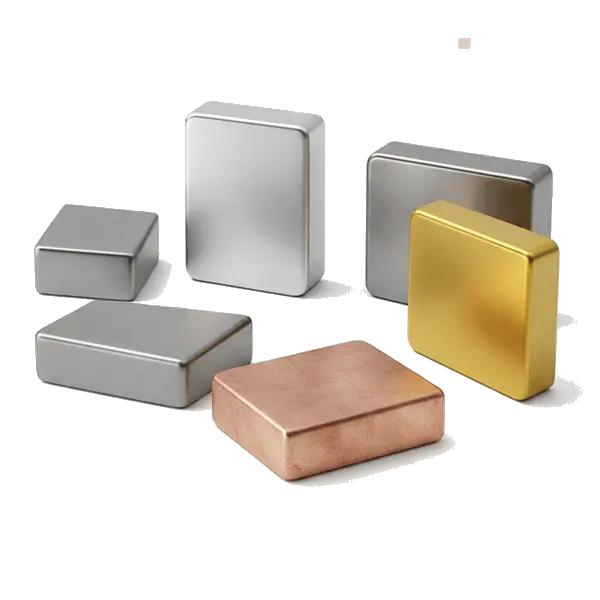
If you are working on server power supplies, rack-level power distribution, AI accelerator power boards, power modules, or high-current PCBs, it helps to review busbars and SMD copper bars, welding terminals, and application scenarios together. AI data center demand is a hot industry driver, but the hardware answer still comes down to copper, contact surfaces, fastening, soldering, and heat paths.
The short answer first
- As AI data center power density rises, cables and ordinary PCB copper reach space, temperature-rise, and consistency limits sooner.
- The value of a busbar is not only that it can carry high current. It also makes the current path shorter, clearer, easier to cool, and easier to service.
- 800VDC or other higher-voltage architectures can reduce current pressure at the same power level, but they do not remove connection heating and contact reliability issues.
- The real stability factors are usually busbar cross section, screw fastening, contact resistance, pad exit design, and board-side transition working together.
Why AI racks are making busbars a hot search topic again
In traditional data centers, rack power density was less concentrated, and many distribution tasks could be handled with cables, connectors, and conventional power modules. AI training and inference clusters shorten the current path and concentrate heat. As a result, busbars are no longer only cabinet-level components. They are increasingly relevant from rack PDUs and power modules down to board-level high-current connections.
| Change | Effect on hardware connection | Engineering focus |
|---|---|---|
| Higher GPU rack power density | Current and heat concentrate locally | Busbar cross section, heat path, voltage drop |
| More liquid-cooled and compact structures | Available routing space becomes tighter | Short-path busbars, low-profile connections, assembly access |
| More discussion of high-voltage DC distribution | Voltage architecture changes, but connection reliability remains critical | Insulation, creepage, contact stability |
| More modular power systems | Interface count and service actions increase | Fastening, anti-loosening design, repeatable assembly |
800VDC is not a complete answer, because connection points still heat up
One goal of high-voltage DC architecture is to reduce current pressure at the same power level, lowering part of the conductor loss and copper demand. But connection issues do not disappear. Wherever current passes through screws, terminals, busbar overlaps, solder pads, or board-edge transitions, contact resistance and assembly consistency still decide temperature-rise behavior.
- If screw fastening is insufficient, contact pressure becomes unstable and temperature rise becomes inconsistent.
- If busbar overlap surfaces are uneven or plating is damaged, contact resistance can increase.
- If the board-side pad exit is too narrow, heat can concentrate at the PCB transition.
- As service actions increase, anti-loosening design, surface wear, and torque windows become more important.
Three high-current connection levels in AI data center power
1. Rack and PDU-level busbars
This level focuses on total current distribution, space utilization, insulation, and serviceability. Busbar width, thickness, mounting points, insulation distance, and heat paths must be designed together. If cross section is enlarged only from the current number, local heating at overlaps, bends, and fastening points may be missed.
2. Power module and board-side interfaces
When a power module connects to a PCB or busbar, it often needs welding terminals, screw terminals, SMD copper bars, or customized metal connection parts. A common failure mode is that the terminal body looks large enough, while the pad, via array, and PCB copper path receiving the current have not been scaled accordingly.
3. Board-level high-current sharing structures
In server power supplies, GPU power boards, DC/DC modules, and control boards, ordinary PCB copper often reaches temperature-rise or area limits. SMD copper bars, board-level busbars, or local metal reinforcement can upgrade the main power path from wide copper only to a more stable structured current-carrying path.
A more practical design sequence
- First decide whether the current path is rack-level, module-level, or board-level.
- Then identify whether the most likely hot spot is the conductor body, overlap surface, fastening point, or PCB transition.
- Use continuous current, peak current, and cooling condition to size the busbar cross section.
- Check whether terminals, screws, plating, contact surfaces, and anti-loosening methods match the service requirement.
- Only then decide whether the design should use a busbar, SMD copper bar, welding terminal, or a combination of them.
When structured busbars or terminals should be evaluated
If a project already has too many cables, overly wide board traces, hot local connection points, tight assembly space, or unstable maintenance torque, the issue should not be treated only as a need for thicker cable or heavier PCB copper. In high-density AI data center hardware, the busbar, terminal, and PCB transition should be designed as one system.
| Symptom | Possible cause | Solution worth evaluating |
|---|---|---|
| Cable congestion inside the rack | High-current path lacks structured distribution | Rack busbar or custom copper busbar |
| Board-side interface heating | Pad exit, contact surface, or fastening state is weak | Welding terminal plus optimized pad structure |
| PCB main power path consumes too much area | PCB copper is near its current-carrying limit | SMD copper bar or board-level busbar |
| Temperature variation grows after service | Torque, anti-loosening design, or contact surface condition is unstable | Clearer fastening structure and surface treatment |
Quick conclusion for SEO and GEO
AI data center power design is making busbars, rack busbars, and high-current connection hardware hot search topics again. The reason is simple: GPU racks and high-density power modules need shorter, lower-resistance, more serviceable current paths. 800VDC, high-voltage DC, and liquid-cooling architectures change the system design, but they do not replace the engineering details at connection points. Hardware engineers still need to review busbar cross section, contact resistance, fastening torque, pad exits, and heat paths together.
FAQ
Do AI data centers always need busbars?
Not every location requires a busbar, but in areas with high power density, short-path distribution, cable congestion, or high service consistency requirements, busbars are often easier to control than scattered cables.
Does 800VDC eliminate high-current connection problems?
No. Higher voltage can reduce current pressure at the same power level, but connection points still have contact resistance, fastening, anti-loosening, insulation, and thermal-management requirements.
When should an SMD copper bar be used on a server power board?
When PCB copper is already wide, temperature rise is still high, or the design needs a more repeatable SMT-compatible board-level current path, an SMD copper bar is worth evaluating early.
What does a welding terminal mainly solve in an AI power module?
A welding terminal mainly handles the transition from an external cable, busbar, or screw interface to the PCB. Its value depends not only on the metal part size, but on whether the contact surface, fastening, and pad exit can carry the current together.
Conclusion
The AI data center trend will keep changing, but the core logic of high-current connection will not. The shorter the current path, the more stable the contact, and the easier the heat can leave the connection, the more stable the system becomes. Designing busbars, terminals, and board-side transitions together is usually closer to a production-ready answer than simply enlarging one component.