


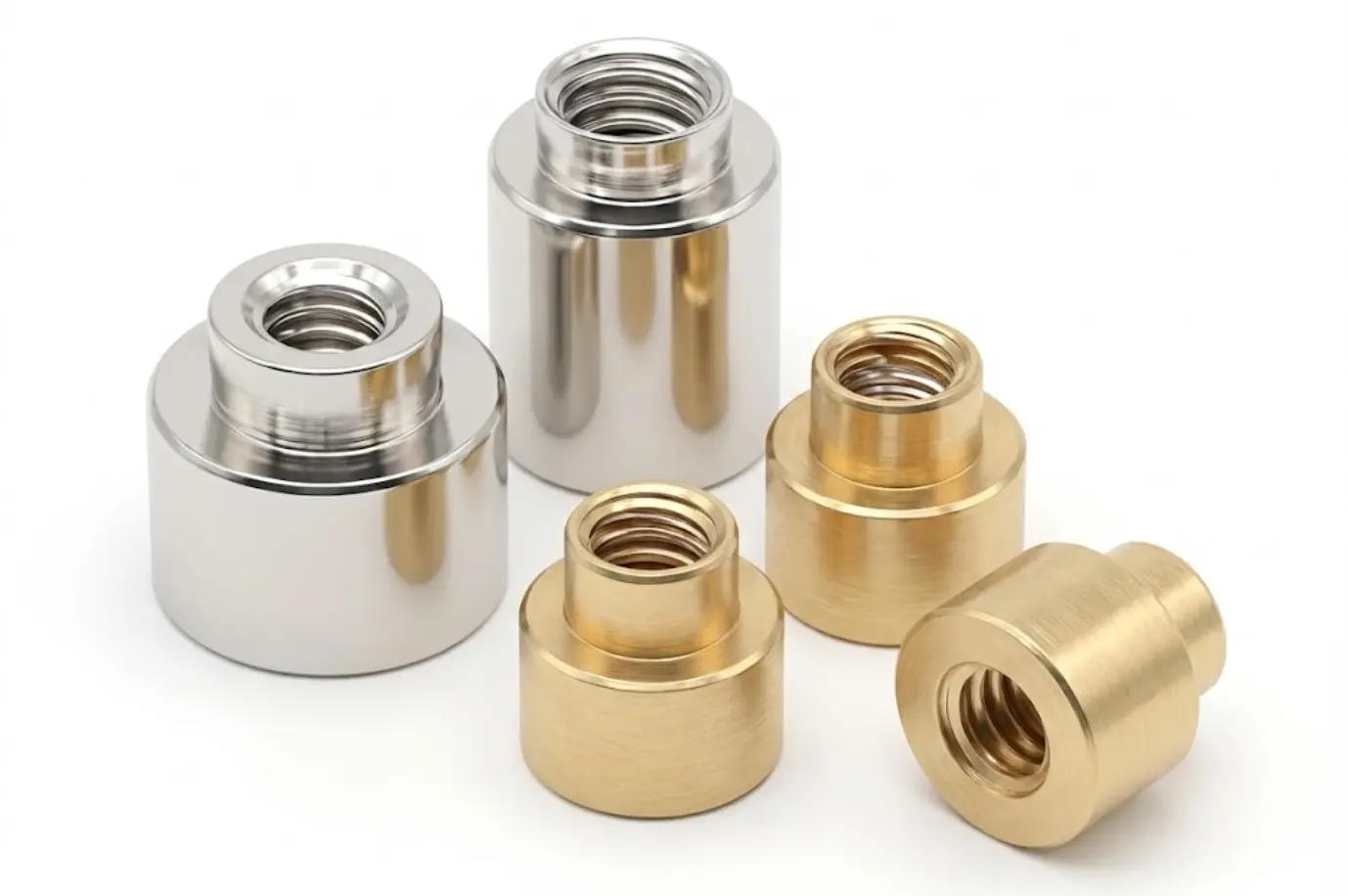
If the fastening point needs to move through SMT placement and reflow together with the PCB, start with an SMT nut. If the thread belongs to a chassis, sheet-metal part, or a post-assembly clinching process, start with a self-clinching nut. The real decision is not about the name of the part, but whether the assembly order, substrate, service pattern, and production rhythm match the fastening method.
For board-level electronics, it helps to review the SMT nut page, the model coding and selection page, and the technical support page inside one decision framework. That makes it easier to separate what should be solved in PCB fastening from what should be handled by sheet-metal structure or downstream assembly.
Start with the first decision: is the fastening point on the PCB or on the metal structure?
This is the easiest point to overlook, and also the fastest way to eliminate the wrong option. SMT nuts are mainly for board-level fastening and automated placement, while self-clinching nuts are better suited to sheet metal, chassis parts, and post-forming structural assemblies. When a sheet-metal method is forced into a PCB workflow, or a board-level part is asked to carry chassis-level loads, the result is usually a process, strength, or service problem later.
- If the fastening point is on the PCB and should enter SMT and reflow, SMT nuts are usually the better fit.
- If the fastening point is on sheet metal, a shield can, a chassis, or a metal panel, a self-clinching nut is usually more appropriate.
- If the load path should stay in the metal frame instead of the PCB copper and solder joints, the clinching route is usually more logical.
- If the project depends on tape-and-reel supply, pick-and-place automation, and batch consistency, SMT nuts usually integrate more smoothly into the line.
The core differences between the two options
| Decision factor | SMT nut | Self-clinching nut | Selection reminder |
|---|---|---|---|
| Main substrate | PCB | Sheet metal or chassis panel | First confirm whether the thread belongs to the board or to the enclosure structure |
| Where it enters production | SMT placement and reflow stage | Stamping, clinching, or downstream assembly stage | Once the assembly sequence is wrong, recovery is usually expensive |
| Automation style | Can follow tape-and-reel and pick-and-place | Usually depends on clinching tools and secondary operations | Review line capability and takt time together |
| Typical constraints | Pad design, reflow window, PCB strength | Panel thickness, pilot hole, clinching force, and metal ductility | Do not compare only thread size |
| Service behavior | Good for integrated board-level fastening points | Good for chassis and panel maintenance points | Judge the real load path and service frequency |
When an SMT nut is the better fit
1. The fastening point must go through reflow with the PCB
If the product wants the threaded point built directly into the board assembly flow instead of being added by a later manual step, an SMT nut is usually the better choice. Solutions such as the HCSMT series are designed around SMT automation, EIA tape-and-reel packaging, and reflow compatibility, which makes them easier to standardize in board-level mass production.
2. The structure should not depend on risky secondary processing around the PCB
In consumer electronics, telecom equipment, automotive electronics, and new-energy control boards, many fastening points need a defined height, thread size, and location directly on the PCB. If the project then introduces clinching, flanging, or extra metal-panel work on top of that, the process chain often becomes longer and board-level consistency becomes harder to control.
3. The project values placement rhythm and production consistency
When the factory already has a stable SMT line, a known reflow window, and tape-and-reel material handling, SMT nuts fit the existing flow more naturally. For common thread sizes such as M1 to M4, engineering should focus less on whether a screw can be installed and more on pad design, thermal stability of the base, and the real load path after fastening.
When a self-clinching nut is the better fit
1. The thread belongs to the chassis or metal panel from the beginning
If the threaded function is intended for an enclosure, shield, metal bracket, or panel and the load path stays inside the metal part itself, a self-clinching nut is often the simpler answer. Its advantage is built on sheet-metal forming and mechanical embedding, not on board-level soldering.
2. The structural load and torque should be carried by the metal part
When the fastening point must handle more obvious tightening force, pull-out risk, or panel service action, engineers should first ask whether that load path should stay in the metal structure. If the main mechanical responsibility should not be pushed into local PCB solder joints and copper areas, a clinching solution is usually the better structural choice.
3. Assembly happens after the enclosure geometry is fixed
Some projects only finalize chassis, cover, or bracket positions in a later phase. In that case, a self-clinching route often fits the sheet-metal development sequence better. It is fundamentally a structural manufacturing method rather than a board-assembly method.
Ask these five questions before locking the solution
- Does the fastening point finally live on the PCB or on a metal panel?
- Does this thread need to pass through reflow, or can it be introduced in downstream assembly?
- Is the main load created by tightening, handling, and service, or is it only for light structural positioning?
- Does the project care more about SMT automation rhythm or about sheet-metal structural strength?
- Will repeated service actions place stress near board-level solder joints over time?
A common mistake: comparing only the thread size and ignoring process ownership
Many discussions jump directly to M2, M2.5, or M3, but the real reason a project fails is often not the thread size. It is a wrong decision about process ownership. SMT nuts and self-clinching nuts both provide threads, but they serve different manufacturing stages, different substrates, and different load paths. The same thread does not mean the process is interchangeable.
FAQ
Can an SMT nut directly replace a self-clinching nut?
Not always. If the fastening point belongs to the PCB and should enter SMT and reflow, an SMT nut is usually the better fit. If the fastening point belongs to sheet metal or the chassis structure, a self-clinching nut is usually the better answer.
Can a self-clinching nut be used directly on a PCB?
That is usually the wrong way to frame the decision. Self-clinching solutions are based on sheet metal, while PCB fastening needs attention to pad design, reflow window, and board-level load behavior. Replacing one with the other only because the thread size matches usually creates more risk later.
Does high adhesion mean an SMT nut can handle every structural fastening task?
No. Adhesion is only one factor. The real decision still depends on tightening torque, structure weight, service frequency, load direction, and the strength of the PCB itself.
Conclusion
The key difference between an SMT nut and a self-clinching nut is not which one is universally stronger. It is which manufacturing stage and which substrate each one is designed to serve. If the assembly order, load path, and service pattern are clear first, choosing the thread size and geometry becomes much easier and more reliable.