


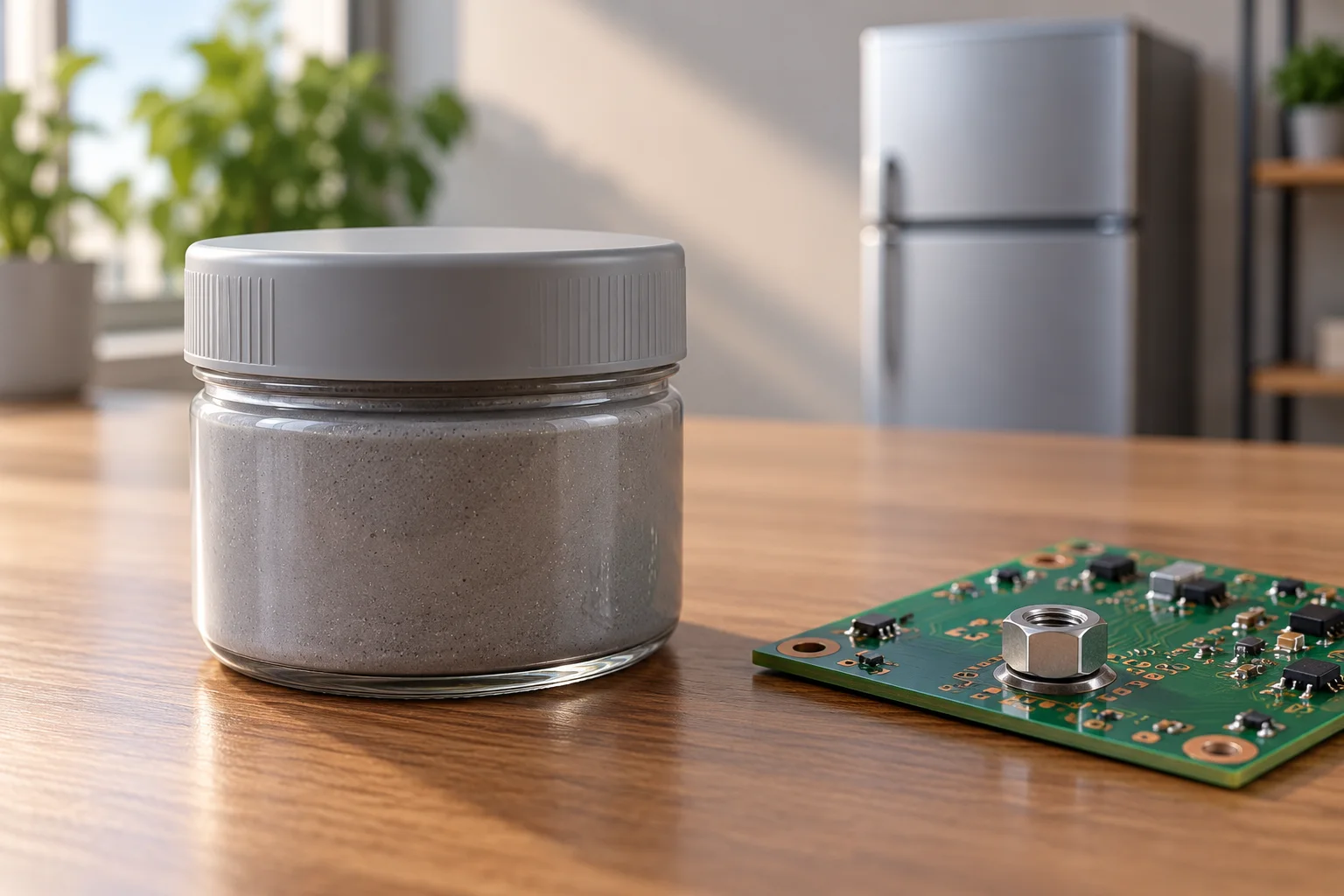
Manage solder paste for SMT nuts using the actual product instructions. Keep the refrigerated container sealed during conditioning and open it after the specified use conditions are met. Record warmup, refrigerated shelf life and working exposure separately. A single warmup time does not apply to every formulation and package.
Reach the qualified use condition before opening
AIM handling advice and Nordson EFD's FAQs both discuss reaching ambient working temperature and condensation risks. Their preparation times differ, and Nordson specifically addresses package differences and customer validation. These general pages do not establish one mandatory timer for every solder paste.
A container that feels warm externally provides only a rough observation. Release should follow supplier requirements and a validated conditioning process. Container size, starting temperature, package and environment affect the time. Do not open a container and insert an unapproved thermometer into the paste.
Keep distinct timestamps for each container
| Record | Purpose | Confusion to avoid |
|---|---|---|
| Product and expiry | Manufacturer, full model, lot, package and label date | Using T4/T5 as full product identity |
| Removal from refrigeration | Start of conditioning and exposure history | Calling it the opening time |
| Condition release and opening | Evidence of readiness and actual opening | Only retaining shift handover approval |
| Stencil use and recovered material | Trace working exposure and destination | Mixing used paste into fresh paste to restart a clock |
Include the date and applicable time zone across shifts or midnight. Use min or h for duration and °C for temperature, with relevant environmental conditions. “Taken out this morning” is not reproducible. Product instructions may define warmup, opened-container and stencil exposure differently; resetting one record does not extend another limit.
Check heating, mixing and return-to-storage instructions
Both references emphasize natural conditioning. Do not place paste at a hot-air outlet or on a heater to accelerate a schedule. Mechanical mixing, conditioning equipment and refrigeration after opening require the actual product's controlled instructions, not another brand's procedure.
AIM also advises against mixing used and new paste in one container. Define identification, storage and disposition of recovered paste. Without approved conditions, do not return it to unused-material status. A uniform appearance does not establish every processing property.
Preserve evidence when soldering changes
For SMT nuts and surface mount threaded hardware, retain paste lot and time-temperature history. Compare controlled samples while keeping parts, stencil and thermal conditions consistent. Changing paste, stencil and oven together obscures the cause.
T4/T5 and full solder paste identity address material selection. This page addresses its condition during preparation and use. Time records alone do not demonstrate joint strength or torque capability.
Common questions
Does refrigeration restore an expired label date? It does not automatically extend shelf life. Follow supplier and project disposition requirements.
Can a smaller package always use half the warmup time? No. Use applicable instructions or process validation rather than proportional scaling.
References
AIM solder paste handling advice; Nordson EFD solder FAQs.
The cover is an AI sealed-conditioning illustration, not a Hongchuan factory. No universal storage temperature, warmup duration, working life or soldered-nut strength is specified.