


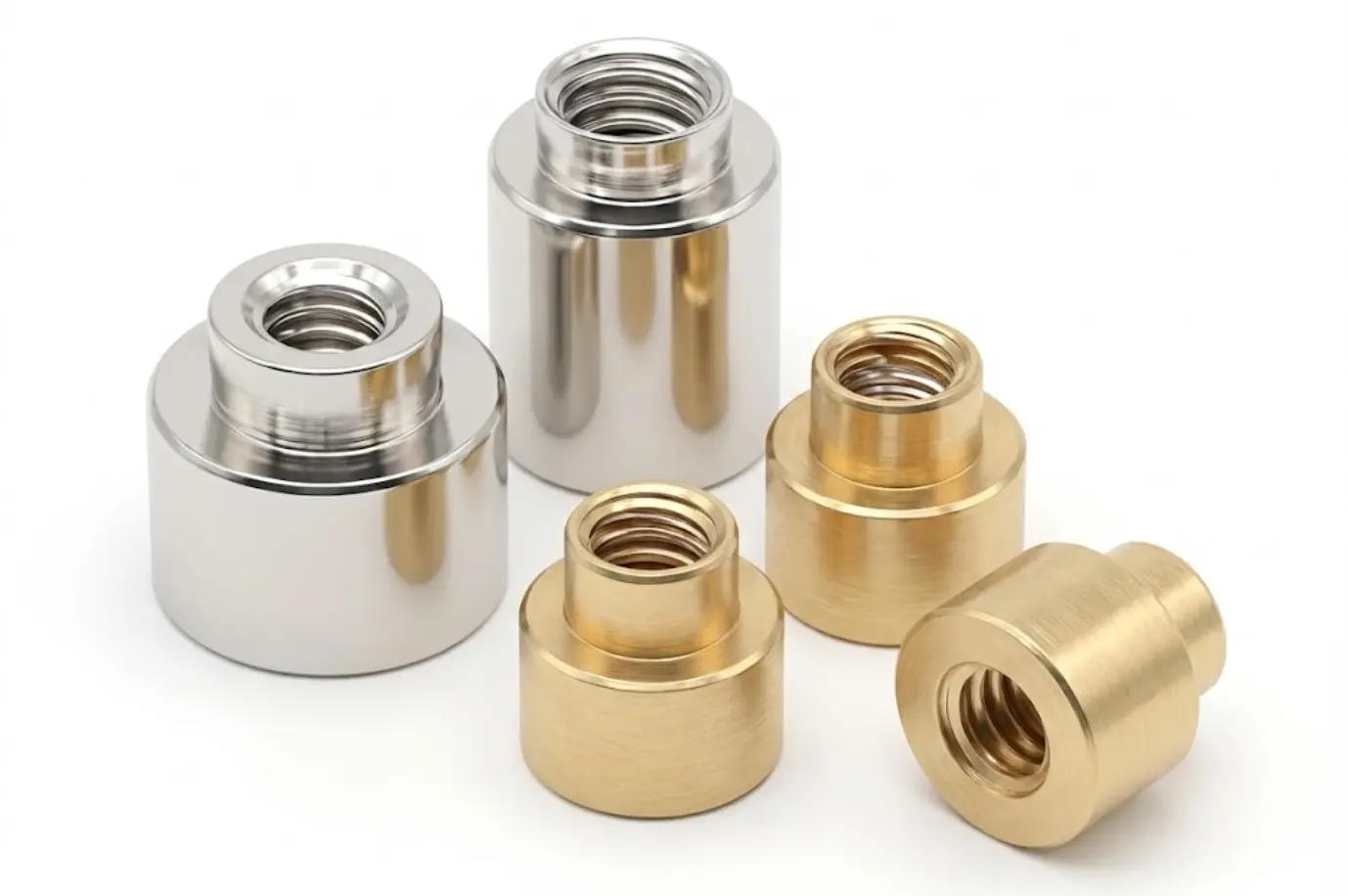
If your medical device control board needs threaded points for shield covers, thermal parts, or small structural pieces after reflow while also balancing low profile and repeated service, an SMT nut is often worth evaluating before loose post-assembly hardware. Its value is not only adding a threaded hole to the PCB, but aligning structural fastening, SMT placement, and downstream screw assembly inside one design logic.
For projects that care about board space, assembly rhythm, and later service access at the same time, it helps to review the HCSMT SMT nut page, applications page, and support page together. That makes it easier to judge thread size, pad window, and structural load in one framework instead of solving fixing issues only after prototypes appear.
Why medical device control boards often consider SMT nuts early
Portable medical devices and monitoring-system boards often face low profile, lightweight structural parts, and relatively frequent service access at the same time. In that kind of board-level structure, the advantage of an SMT nut is that the thread point becomes part of the SMT process instead of depending on later-added hardware to solve mechanical fixing.
- Useful for defining fastening points early for top covers, shield covers, and small thermal parts.
- Useful for thin-board modules with dense surrounding components.
- Useful for production programs that require repeatable fastening and better consistency.
- Useful when the team wants fewer manual add-on steps and less positioning drift.
Which positions deserve SMT nuts first
| Application point | Common part being fixed | Main design focus |
|---|---|---|
| Monitoring-system control board | Top cover, shield cover, insulation plate | Low height, thread size, and tool access |
| Test-instrument main board | Thermal part, small bracket | Pad window, load direction, and keep-out area |
| Portable-device auxiliary board | Thin structural piece, fixing tab, light guard | Tolerance fit, assembly consistency, and downstream fastening path |
Five questions to answer before selecting
1. Does the thread size really match the part being fixed
An SMT nut is not automatically more stable just because it is larger. Engineering teams should first confirm the real screw size, the target part, and the load direction. Fixing a light top cover is a different decision from fixing a thermal part.
2. Is there enough board height and keep-out area
Medical-device control boards are usually crowded. The SMT nut height, base size, and pad footprint should be reviewed together with connectors, shielding frames, and nearby components. If the design looks only at the thread and ignores tool access, structural conflicts often appear later.
3. Is the reflow window stable enough
Soldering stability is directly tied to pad design, solder distribution, and the thermal balance of nearby copper. In volume programs, a clearer reflow window makes adhesion and positional consistency easier to control.
4. Will fastening force and repeated service feed back into the solder joint
Many failures do not come from the thread itself, but from screw fastening, cover-opening maintenance, or structure stress feeding mechanical force back into the solder joint. Whenever the module will see repeated service and disassembly, load path and fixing point should be reviewed together.
5. Does the project prioritize automation or post-assembly flexibility
If the project is already production-oriented, EIA tape reel SMT nuts work better with pick-and-place, reflow, and downstream assembly. If the structure still changes often, loose hardware may feel more flexible, but it usually weakens takt-time and consistency control.
How SMT nuts and post-assembly options should split roles
| Approach | Best fit | Main caution |
|---|---|---|
| SMT nut | Programs that need SMT automation, repeat fastening, and stable structural points | Pad layout, space, tolerance, and reflow process must be reviewed early |
| Post-assembly nut or stud | Prototype, low-volume, or frequently changing structures | More manual steps and weaker production consistency |
| Adhesive or clip-based fixing | Light parts with low service frequency | Later maintenance capability needs separate review |
Useful HCSMT points to review first
If the project wants to start from standardized options, the HCSMT series already provides several practical baseline references that are enough for first-round screening.
- Thread sizes from M1.0 to M4 fit many small structural needs on control boards.
- Material options include brass and stainless steel for different environmental and structural goals.
- Surface finishes include tin, nickel, and gold for solderability and durability evaluation.
- EIA tape reel packaging supports automated placement and better production rhythm.
A more practical selection sequence
- Confirm whether the target part is a top cover, thermal part, or small bracket, and define the screw size first.
- Review board height, keep-out area, and tool access.
- Evaluate pad window, reflow process, and load path.
- Only then compare material, plating, feeding format, and production rhythm.
FAQ
Does a medical device control board always need SMT nuts?
No. If the fixed part is light and service frequency is low, other methods may still work. But when the project values predefined board-level thread points, repeat fastening, and production consistency, SMT nuts usually deserve earlier priority.
Is a larger thread always better?
No. A larger thread also raises space use and pad requirements. The better approach is to match the size to the part being fixed, fastening torque, and actual structural load.
What is the most overlooked issue in SMT nut selection?
The most common miss is separating load path from solder-joint strength. Many ideas look fine in drawings but later concentrate fastening stress or structure distortion back into the soldered area.
Conclusion
Selecting an SMT nut for a medical device control board is not just about attaching hardware to a board. It is about letting SMT manufacturing, structural fastening, and downstream assembly work inside one design logic. Once thread size, board space, reflow window, and load path are clarified early, an SMT nut solution usually creates production stability much sooner.