

Quick answer: Select copper-aluminum connectors for a marine shore-power converter by validating material transition, contact pressure, salt and humidity, cabinet vibration, insulation support and post-service resistance together. Initial torque and resistance do not prove marine life.
Questions answered on this page
- Why use copper-aluminum transition hardware in shore-power converters?
- How do humidity and salt affect the interface and finish?
- How should washers, bolts and support retain pressure?
- How do vibration and cable load change the joint?
- How should resistance and temperature be checked after exposure?
Application context
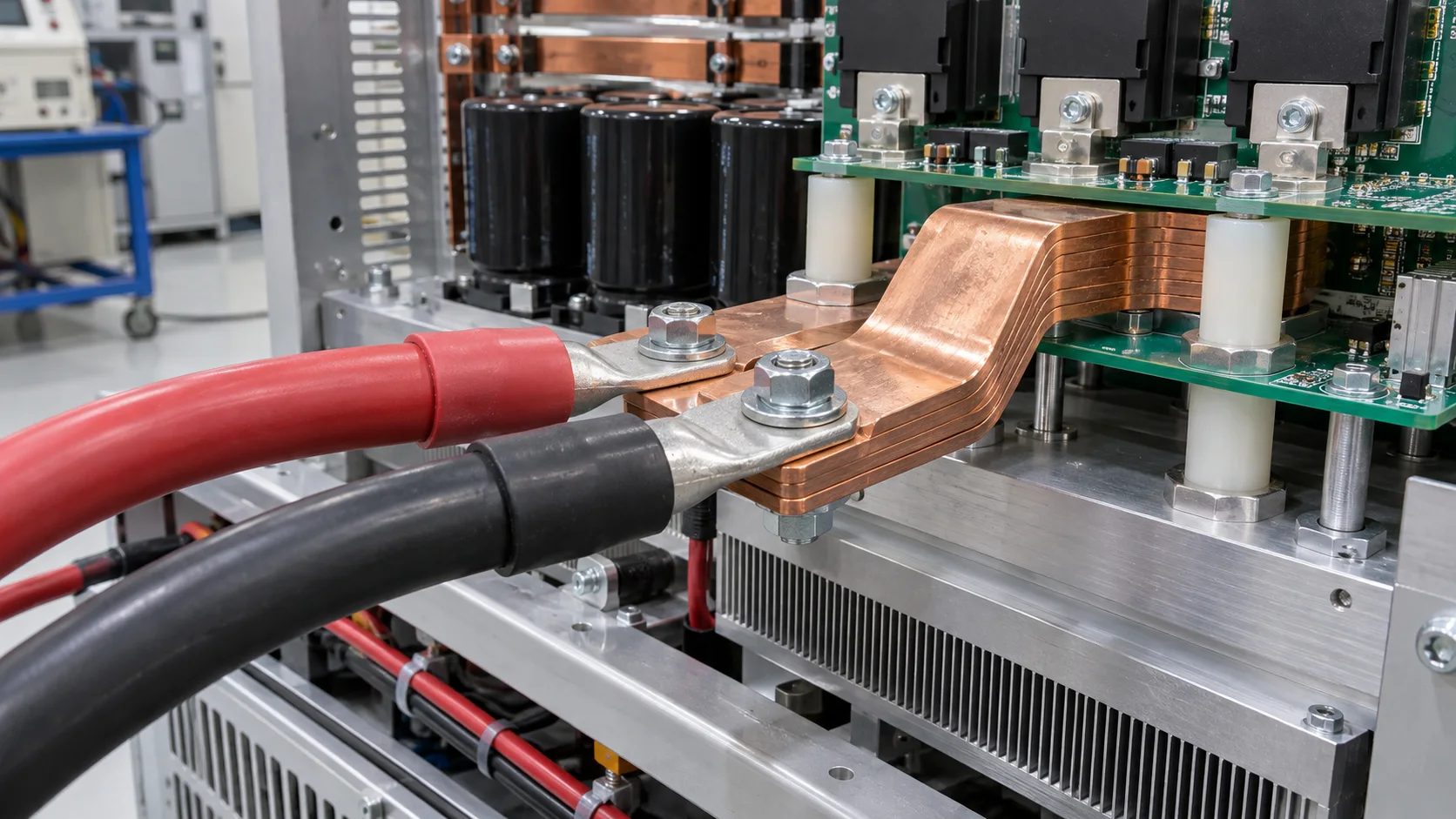
Marine shore-power systems connect shore input, rectifiers, DC buses, inverters and onboard loads. Copper conductors, aluminum conductors, aluminum housings and copper terminals may coexist. Transition bars or composite connectors handle the material change, while bars and cables need independent support. Hongchuan supplies copper-aluminum hardware matched to material, thickness, pitch, current, cable, bolts, washers, torque, salt and vibration.
Five environmental controls
| Point | Review | Risk |
|---|---|---|
| Interface | Transition, composite zone, finish and flatness | Rising resistance |
| Pressure | Bolt, washer, hole and support | Vibration or thermal relaxation |
| Environment | Salt, moisture, condensation and residue | Galvanic corrosion |
| Mechanical | Cable load, cabinet vibration and bracket stiffness | Movement or fatigue |
| Thermal | Continuous current, cooling and nearby heat | Local overheating |
Salt, vibration and temperature validation
Measure copper, aluminum, transition, bolt, washer and insulation temperature under power, and use four-wire segmented drop. Before and after environmental exposure compare resistance at the same current and points while recording bolt marks, washer indentation, finish wear, movement and insulation scuffing. See copper-aluminum interface validation.
Sealing, washers and service
Use suitable interface design, finish, sealing, drainage and protection to limit electrolyte entry. On aluminum inspect oxide, indentation and hole edges; on copper and finish inspect wear and contamination. Sealant cannot replace the conductive area or allow water to collect at the joint. Define cleaning, washer replacement, bolt reuse, torque recheck and low-resistance measurement for service. Establish baselines, run rated current, thermal, vibration, salt and humidity exposure, then repeat resistance, temperature, insulation and movement checks.
FAQ
Does sealant alone prevent corrosion?
No. Control conductive interface, drainage, finish, washer and pressure as well.
Can vibration be skipped when initial torque passes?
No. Cabinet vibration and cable load can change preload and position.
How should samples be specified?
Provide materials, pitch, current, cable, environment, washer, bolt, torque and support. Start with the copper-aluminum hardware page.