


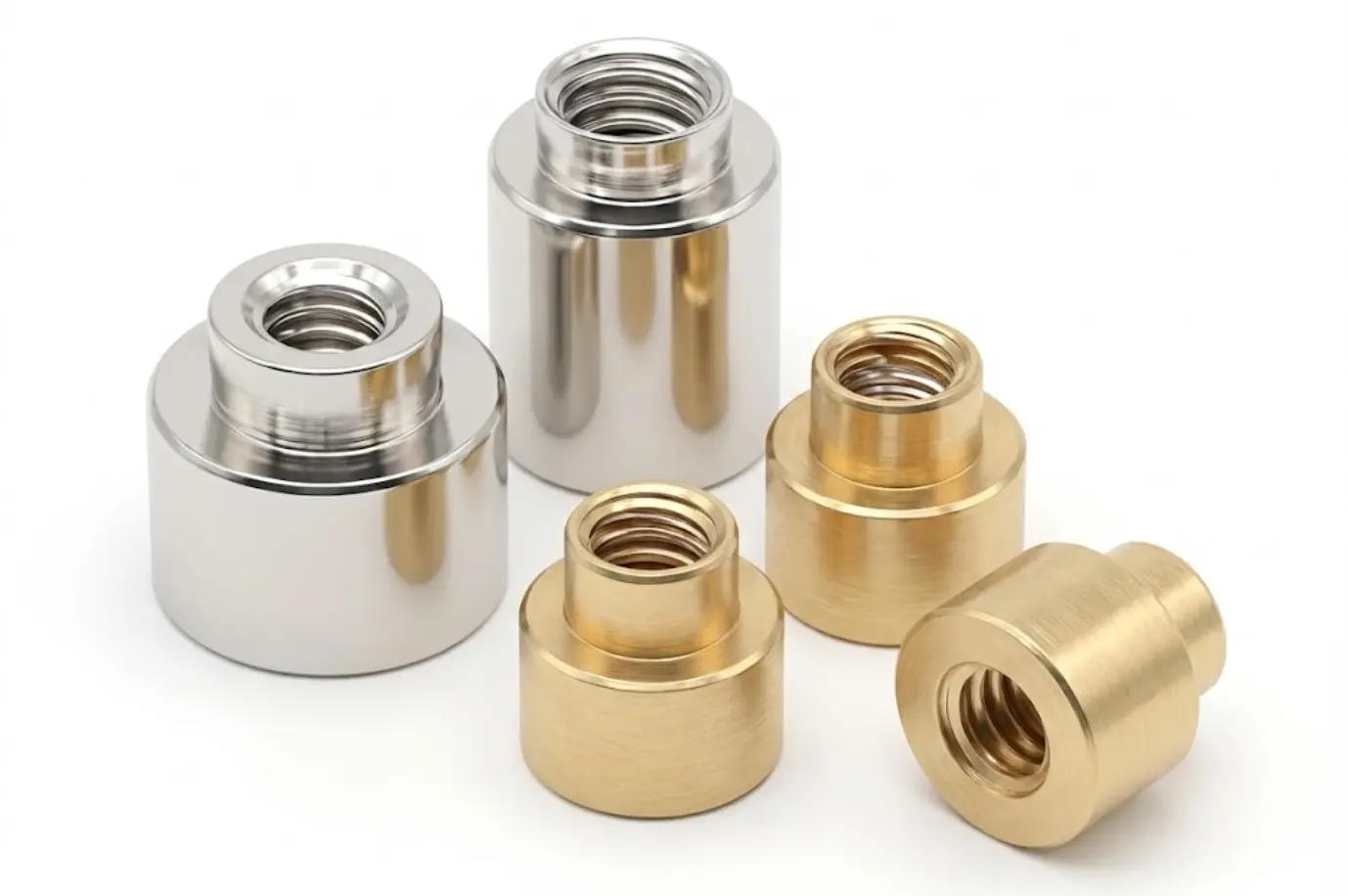
If your industrial sensor module or I/O board needs to stay low-profile while also supporting shielding-cover fastening and later service, an SMT nut is often worth evaluating before loose nuts or improvised mechanical parts. Its value is not only the thread itself. It is the ability to place SMT assembly, structural fastening, and repeated service inside one production-friendly logic.
For projects that care about both automated assembly and later maintenance, it helps to review the SMT nut page, applications page, and product center together. That makes it easier to assign SMT nuts, clinch hardware, and conventional fasteners to the right positions instead of deciding only by the unit cost of one part.
Why industrial sensors and I/O modules consider SMT nuts
These modules usually combine tight space, many board-edge interfaces, thin structural parts, and frequent removal of housings, shielding covers, or wiring protection parts during service. SMT nuts fit best where automated placement, repeated fastening, and low-profile control must exist together.
- Useful for standardizing the fastening relationship between thin housings and the PCB.
- Useful for volume programs that need reflow compatibility and high-speed placement.
- Useful for modules with shielding covers, heat spreaders, or protection covers that may need removal.
- Useful when the team wants less assembly variation from loose nuts.
Which positions deserve SMT nuts first
| Application point | Why an SMT nut fits | Main design focus |
|---|---|---|
| Module housing fastening point | Helps unify enclosure fastening and board-level structure | Height limit, edge spacing, and fastening direction |
| Shielding-cover fastening point | Helps create stable and repeatable removal plus grounding logic | Thread size, grounding path, and service frequency |
| Wiring cover or terminal protection part | Supports easier maintenance and less manual alignment error | Tool access, nearby component clearance, and load path |
When an SMT nut may not be necessary
If the structural part is thick, the assembly rhythm does not depend on SMT, or the point is rarely opened through the product lifetime, a clinch fastener or conventional hardware may still be better. SMT nuts are strongest in low-profile board-level fastening that must match automated assembly. They do not need to replace every fixing point.
| Approach | Best role | Main caution |
|---|---|---|
| SMT nut | Low-profile board-level fastening points, repeat-service positions, and shielding-cover interfaces | Confirm pad layout, reflow window, and fastening torque early |
| Clinch fastener | Thicker structural parts or later-installed metal parts | Strong, but not always aligned with SMT assembly flow |
| Conventional stud or loose nut | Low-service positions or points needing more assembly freedom | Simple on cost, but usually weaker in repeatability and automation efficiency |
Five questions to answer before selecting
1. Does the fixing point only hold structure, or also support grounding and shielding
If the point also supports shielding-cover grounding or heat-spreader compression, the SMT nut should not be selected by thread size alone. Contact area, assembly sequence, and repeat-fastening stability all matter.
2. Is the module height window really sufficient
Industrial sensors and I/O modules are often limited by enclosure height, connector outline, and DIN-rail structure. If the team checks only strength and ignores total stack-up height, mechanical conflicts usually appear later.
3. Will reflow conditions and nearby components affect solder consistency
The value of an SMT nut depends on stable placement and soldering. If pad design, spacing, or thermal mass distribution are poorly handled, volume production can see shifting, uneven wetting, or difficult repair.
4. How frequent is later maintenance really
If the module will be opened repeatedly during debugging, calibration, or maintenance, the interface standardization of SMT nuts becomes very valuable. If the module is rarely opened, other options may still work.
5. Will fastening stress load the solder joint directly
Many failures do not come from the thread itself. They come from fastening action, board bending, or enclosure tolerance sending load directly back into the solder joint. Load path and mechanical tolerance must be reviewed together.
A more practical decision sequence
- Separate the fixing points that need repeated service from those used only once in assembly.
- Confirm whether the point also carries shielding, grounding, or thermal roles.
- Review height window, pad layout, and fastening load together.
- Then decide whether an SMT nut, clinch fastener, or conventional hardware fits best.
FAQ
Does every industrial sensor module need SMT nuts?
No. If the structure is simple, service frequency is low, and SMT rhythm is not important, other options may be more economical. But when the project values automated placement, low-profile structure, and repeated service, SMT nuts usually deserve earlier evaluation.
Which fixing parts fit SMT nuts best?
They usually fit thin housings, shielding covers, protection covers, and other small parts that may be removed repeatedly. It is usually not necessary to replace every fixing point with SMT nuts.
What is easiest to miss in this kind of project?
The most common miss is delaying load-path and tolerance review. Many concepts work in prototypes but expose solder-joint and fit-up risks during volume production or maintenance.
Conclusion
Selecting SMT nuts for industrial sensors and I/O modules is not about choosing a thread size in isolation. The real goal is making automated assembly, low-profile structure, and later maintenance work together. Once height window, solder consistency, load path, and service frequency are clarified early, the mechanical solution usually stabilizes much faster.