


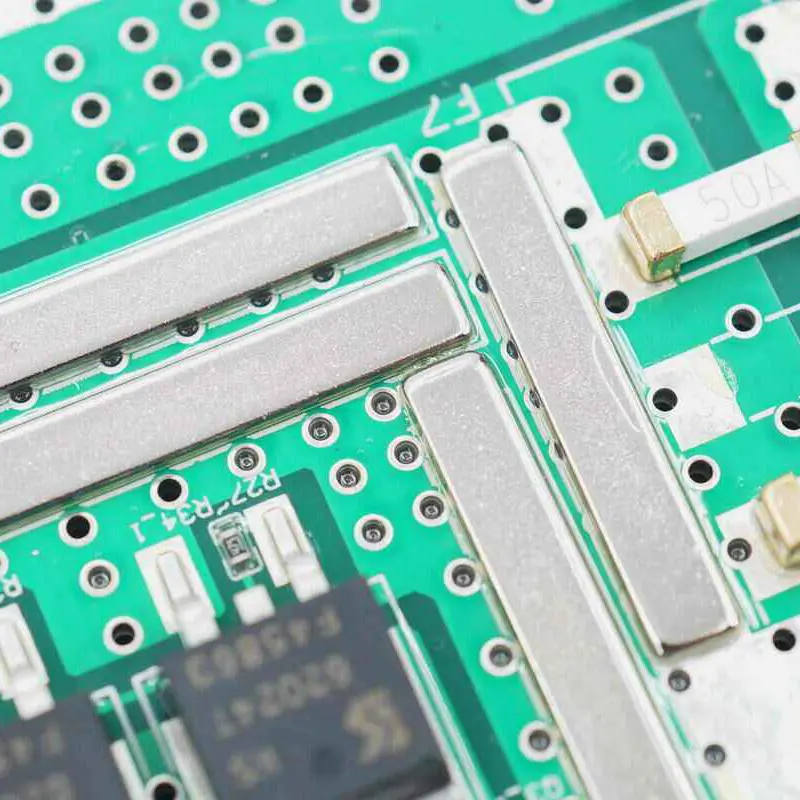
If you are comparing the corrosion resistance of tin- or nickel-plated hardware, a salt spray test can be a useful screening tool, but it is never a complete answer by itself. For board-level metal parts such as SMD busbars, welding terminals, and SMT nuts, the result is usually shaped by the base metal, the plating, the edge condition, the soldering process, and the real service environment together.
If a project cares about corrosion resistance as well as conductivity, solderability, and assembly consistency, it helps to review the busbar page, welding terminal page, SMT nut page, and support page inside one decision framework. That makes it easier to separate a lab comparison result from a real production risk.
What a salt spray test is actually telling you
A more practical way to read a salt spray test is that it shows the relative behavior of a surface treatment under accelerated corrosion conditions and reveals whether weak coating areas are exposed too early. It is better for screening options and comparing process windows than for converting lab hours directly into field life.
- Useful for comparing relative differences between plating options or process conditions.
- Useful for exposing problems at edges, burrs, scratches, and weak coverage zones.
- Useful for finding obvious surface-treatment risks earlier in development.
- Not enough on its own to define absolute life without structure, assembly, and environment.
Why hours alone are not enough
| Common mistake | What really matters | Why judgment becomes distorted |
|---|---|---|
| Assuming more hours is always better | Where failure starts first | The meaning changes completely if failure begins at an edge, thread, or solder-affected zone |
| Comparing only plating names | Coverage quality and weak spots | The same plating label can still hide major differences in coating quality and vulnerable areas |
| Assuming a passed test equals real reliability | Whether the assembled part surface has changed | Soldering, fastening, handling, and friction often change the real condition after production |
How to read results for busbars, terminals, and SMT nuts
The same salt spray result does not mean the same thing for every metal part. The more useful approach is to judge the test together with the role that the part plays inside the system.
| Product type | Main salt spray focus | What selection should emphasize |
|---|---|---|
| SMD busbar | Whether weak points appear first at cut edges, corners, or near current-contact zones | The base material, plating choice, and real exposed surface along the high-current path |
| Welding terminal | Whether interface zones, fastening areas, and board transitions degrade too early | Assembly order, service action, and stress around the interface |
| SMT nut | Whether the thread area, base edge, and post-reflow surface remain stable | Structural fastening needs, solder strength, and repeated service conditions |
Five key variables behind the result
1. Different base metals create different failure paths
The same surface treatment can behave differently on copper, brass, stainless steel, or other substrates after edges become exposed. The real question is whether the base metal matches the target application, not only what the surface is called.
2. Plating type is only part of the story
Purchasing teams often ask only whether the part is tin plated or nickel plated, but engineering teams care just as much about coverage uniformity, weak corners, and whether stamped edges or threaded zones will expose the substrate too early.
3. Edges, burrs, and threads often fail before large flat surfaces
Many samples still look acceptable on the main surface while the actual risk appears first at corners, cut edges, formed features, threads, or near solder joints.
4. Soldering and downstream assembly change the surface condition
Reflow, wave soldering, fastening, clamping, and handling can all leave the finished part in a different state from the original sample. That is why a salt spray result should be judged against something close to the real assembled condition.
5. Real service environments are not just one salt chamber
Field use can add temperature cycling, condensation, trapped moisture, contamination, cleaning residue, and mechanical wear. A salt spray test helps narrow options, but it cannot replace application-based judgment.
A more practical decision sequence
- First confirm whether the part serves as a main conductive path, an interface transition, or a structural fastening point.
- Then identify whether the most exposed area is the flat surface, a cut edge, a thread, or a solder-related zone.
- Review base metal, plating, assembly action, and service environment together.
- Only then use the salt spray result to compare options instead of using hours alone to make the whole decision.
FAQ
Does a higher salt spray hour rating always mean a better part?
No. What matters more is where failure begins, whether that failure affects the real function, and whether the tested sample matches the real assembled condition.
Is nickel plating always better than tin plating in salt spray?
No. The result also depends on the base metal, coverage quality, edge condition, and real service environment, so the engineering decision should look at the full design instead of the plating name alone.
Does passing a salt spray test guarantee field life in a cabinet or outdoor application?
No. A salt spray test is better understood as an accelerated screening method. Real reliability still depends on structure, assembly, temperature and humidity variation, and maintenance conditions.
Conclusion
The point of reading a salt spray test is not to memorize one hour number. It is to understand where corrosion is most likely to start and whether it will actually damage conductivity, soldering stability, or structural function. For board-level hardware such as busbars, welding terminals, and SMT nuts, the result becomes valuable only when base metal, plating, process, and real use conditions are judged together.