


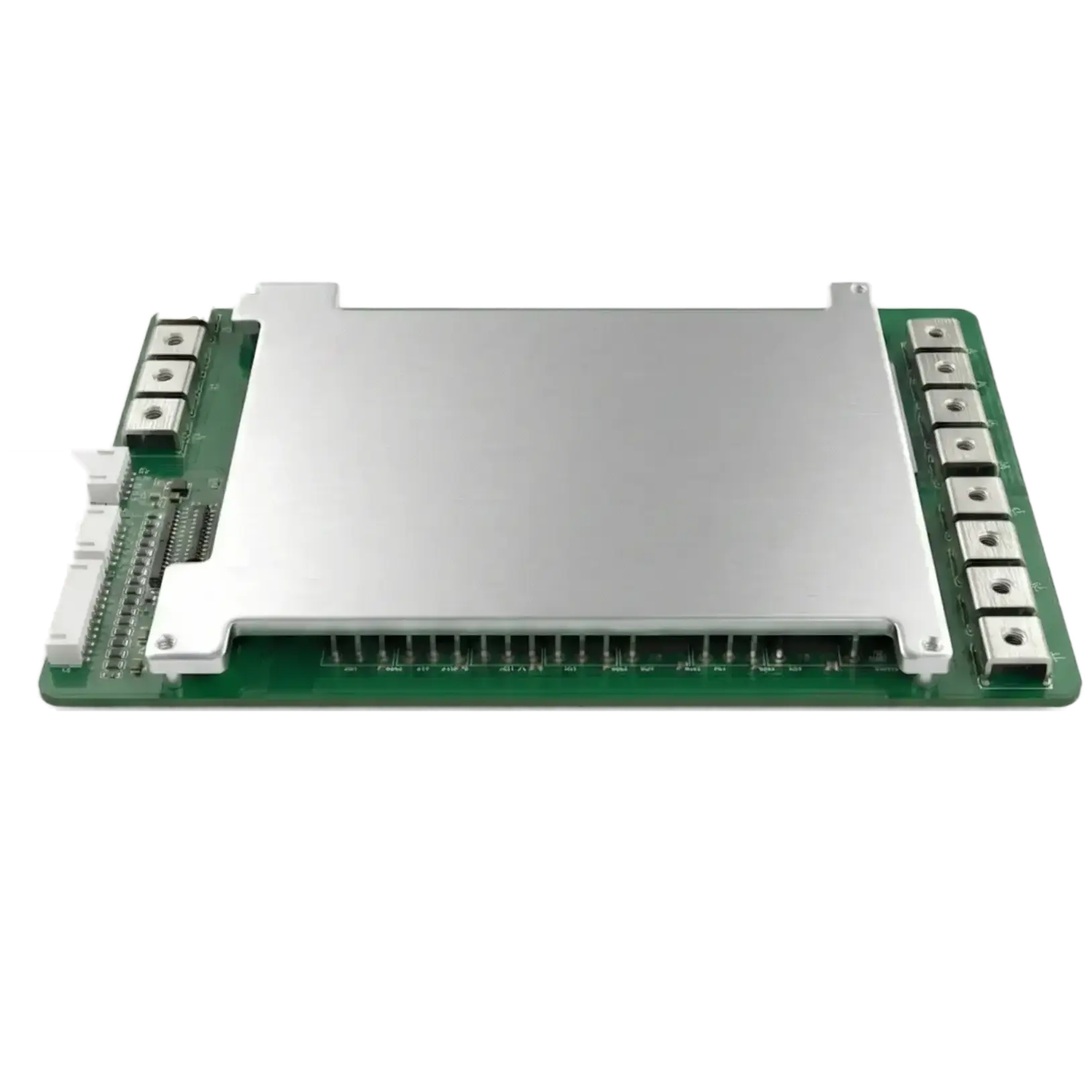
Inside an energy storage cabinet, a welding terminal is often worth evaluating before directly soldered wires when the project wants clearer definition for main-current transitions, fuse-protection connections, and monitoring-wiring positions. The goal is not only to add a connection point, but to make the conductive path, service action, and downstream fastening position easier to standardize.
For projects that care about module connection, cabinet-level distribution, and maintenance access at the same time, it helps to review the welding terminal page, SMD busbar page, and applications page together. That makes it easier to assign the right roles to terminals, busbars, and harnesses instead of forcing one connection type to carry everything.
Why energy storage cabinet distribution often needs terminals
Inside an energy storage cabinet, there are usually fixed high-current short paths, distribution transition points, and auxiliary connections that require service and clear marking. In those positions, the value of a terminal is not only conductivity. It also helps define interface position, assembly direction, and service logic more clearly.
- Useful for separating main-current interfaces from auxiliary wiring interfaces.
- Useful for projects that need fixed cable-exit direction and cabinet service channels.
- Useful for production scenarios that care about consistency and traceability.
- Useful when the team wants less temporary adjustment and rework inside the cabinet.
Which positions deserve distribution terminals first
| Application point | Why a terminal fits better | Main design focus |
|---|---|---|
| Main-current transition point | Helps separate the board-level conductive path from cabinet wiring management | Contact area, load path, and insulation distance |
| Fuse-protection connection position | Makes the protection-device interface clearer within the main-current path | Mounting direction, fastening space, and service convenience |
| Monitoring or sampling wiring point | Concentrates auxiliary wiring into a defined interface area | Marking, cable direction, and nearby spacing |
When a busbar or wire harness should stay in place
If a section is fundamentally a fixed high-current short path, a busbar is usually the more natural choice. If the route is longer, needs flexible detours, or includes more movement during service, a harness is usually more practical. A welding terminal is strongest when it handles interface definition and transition management instead of replacing every conductive structure.
| Approach | Best role | Main caution |
|---|---|---|
| Welding terminal | Main-current transition points, fuse interfaces, and monitoring-wiring interfaces | Insulation distance, load path, and service space need early review |
| SMD busbar | Fixed high-current short paths and board-level distribution nodes | Layout, temperature rise, and installation space should be reviewed together |
| Wire harness | Longer connections, cabinet routing, and positions with more service movement | More flexible, but space use and repeatability still need evaluation |
Five questions to answer before selecting
1. Does the terminal carry the main current or mainly the interface transition
If the terminal mainly manages an interface transition, structural definition, fastening method, and service logic usually matter more than simply making the size larger. If it also carries part of the main path, cross-section, contact area, and heat spreading need to be reviewed together.
2. Are insulation distance and cabinet spacing sufficient
Energy storage cabinets are often compact, so the distance between the terminal and nearby conductors, insulation parts, and structural elements must be checked early. Many late issues come not from insufficient conductivity, but from limited safety spacing and operating room.
3. Will maintenance and fuse replacement remain practical
If protection parts and wiring points need service during the product life, replacement path and tool access must be reviewed early. A terminal is helpful for creating a clear interface, but it does not remove the need for downstream accessibility.
4. Will cable pull and vibration feed stress back into the solder joint
Once cabinet wiring introduces steady pull force, bending force, or vibration, the issue often appears first at the terminal solder joint and fixing point. Whenever that risk exists, downstream stress isolation should be part of the design review.
5. Does the project prioritize consistency or routing flexibility
If the project is already in a production stage, terminals help standardize interface definition and assembly rhythm. If cabinet structure and routing are still changing often, harness flexibility may still be more useful for now.
A more practical decision sequence
- Separate the main-current path, protection path, and monitoring wiring first.
- Confirm which positions need fixed interfaces and which need flexible routing.
- Evaluate insulation distance, load path, and service action together.
- Then decide how terminals, busbars, and harnesses should divide the work.
FAQ
Does energy storage cabinet distribution always need terminals?
No. If the route is short and the structure is simple, other connection methods may still work. But when the project values interface clarity, insulation control, and production consistency, a terminal usually deserves earlier priority.
Can a distribution terminal replace a busbar?
At some transition points, yes. But it is usually better not to let the terminal carry every fixed main path. A more practical approach is to let the busbar handle the fixed short path and the terminal handle interfaces and transition points.
What is easiest to miss in this type of project?
The easiest miss is delaying service space and downstream load review. Many solutions look fine electrically but expose structural risk during cabinet assembly and maintenance.
Conclusion
Selecting terminals for energy storage cabinet distribution is not about choosing one terminal in isolation. It is about assigning the main-current path, protection path, and monitoring wiring to the connection methods that fit them best. Once current path, insulation distance, and service style are clarified early, the production solution usually stabilizes much faster.