


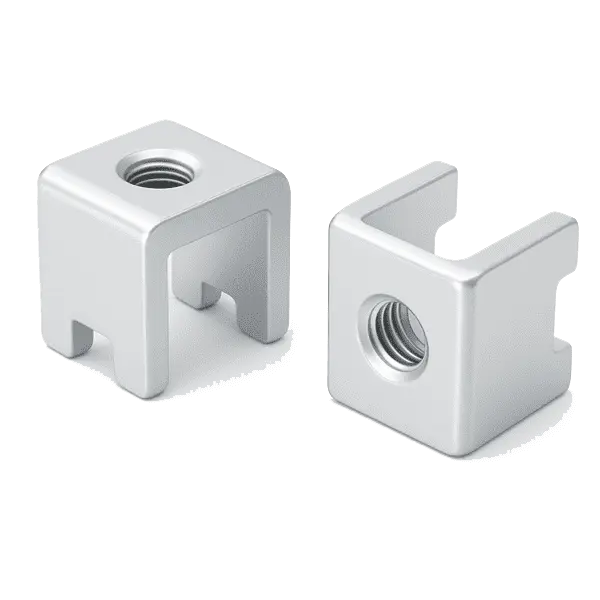
If your drone power distribution board has to control weight while also surviving vibration and allowing faster service, a welding terminal is often worth evaluating before direct flying wires. Its real value is not simply adding a connection point. It is making the main power interface, wire direction, and service action easier to standardize.
For projects that care about both light weight and stable board-level interfaces, it helps to review the welding terminal page, applications page, and busbar page together. That makes it easier to assign the right roles to terminals, rigid conductors, and harnesses instead of forcing one connection style to do everything.
Why drone power distribution boards consider welding terminals
Drone connection design is not the same as ground equipment. It must handle ongoing vibration, compact space, and weight limits while also considering whether maintenance can happen quickly. Welding terminals fit best in positions where the board-level interface should stay clear, wire direction should stay defined, and repeated service may happen.
- Useful for making battery input, ESC power feed, and auxiliary power interfaces clearer.
- Useful for defining cable direction early and reducing assembly-time improvisation.
- Useful for production programs that need to balance vibration resistance and faster service.
- Useful for separating high-current interfaces from signal areas more clearly.
Which positions deserve welding terminals first
| Application point | Why a terminal fits | Main design focus |
|---|---|---|
| Battery input interface | Helps define the main power entry and on-board distribution path clearly | Pad area, load isolation, and wire-entry direction |
| ESC power distribution point | Helps organize multiple outputs and reduce flying-wire crossing | Spacing, current cross-section, and service access |
| Interfaces that may need faster replacement inside the airframe | Helps create a clearer disassembly and repair logic | Tool space, fastening path, and mechanical support |
When a welding terminal may not be necessary
If your project is ultra-light, fully sealed, or uses very short wire runs, direct wire soldering may still be the better fit. Welding terminals are strongest when they manage the board-level interface and the transition to external wires. They do not need to replace every connection segment.
| Approach | Best role | Main caution |
|---|---|---|
| Welding terminal | Board-level interfaces, main power entry, and serviceable connection points | Confirm vibration load, soldering window, and wire fixation early |
| Direct wire soldering | Very short runs, extremely tight space, and one-time assembly points | Flexible, but weaker in repeatability and service efficiency |
| Rigid conductor or busbar | Fixed high-current short paths on the board | More stable, but weight and layout still need review |
Five questions to answer before selecting
1. Does the terminal carry the main power entry or a branch output interface
If the terminal handles the main power entry, cross-section, solder area, and heat spreading matter more. If it mainly serves branch outputs, routing direction, spacing, and service action become more important.
2. Will vibration and cable pull feed stress directly into the solder joint
In drone environments, cable pull and airframe vibration should not land directly on the solder joint. Without proper cable fixation and load isolation, problems usually appear first at the joint and board-edge connection zone.
3. Will the terminal push weight and height beyond target
Not every drone program benefits from adding terminals. In designs that are highly sensitive to weight and height, terminal volume, mounting direction, and downstream accessories all need review instead of checking current rating alone.
4. How frequent is field maintenance really
If the program expects battery changes, ESC replacement, or board-level maintenance, the interface clarity created by welding terminals is often valuable. If disassembly is rare, a simpler connection method may be enough.
5. Is the cable path already stable
Welding terminals fit best after routing direction and structure are already defined for production. If the airframe still changes often, keeping a more flexible connection style usually reduces rework.
A more practical decision sequence
- Separate the main power entry, branch power paths, and signal areas first.
- Confirm which positions need fixed interfaces and which allow more flexible cable handling.
- Then review vibration load, soldering window, and maintenance action together.
- Finally decide which segments should use terminals, direct wires, or rigid conductors.
FAQ
Does every drone need welding terminals?
No. For ultra-light or fully sealed programs, direct wire soldering may be better. But when the project values interface standardization, vibration resistance, and faster service, welding terminals usually deserve earlier evaluation.
Do welding terminals add weight?
Yes, which is why they do not belong everywhere. A more practical approach is to use them at key interfaces and service nodes instead of covering the whole board.
What is the easiest risk to miss?
The most common miss is checking electrical conductivity without reviewing cable load and maintenance action. Many concepts work electrically but show weaknesses during vibration and disassembly.
Conclusion
Selecting welding terminals for a drone power distribution board is not about chasing the largest current rating. The real goal is to balance low weight, vibration resistance, and service efficiency inside one workable structure. Once current path, cable load, soldering window, and service action are clarified early, the board-level interface solution usually stabilizes much faster.