

If a PCB copper busbar will encounter a heated hydrogen-containing reducing process, review Cu-ETP compatibility separately. KME and Aurubis identify hydrogen-embrittlement concerns in such conditions. Similar conductivity does not approve a material substitution, and this warning does not mean that every reflow process damages copper busbars.
Why atmosphere belongs in the material review
KME explains that hydrogen can enter copper during heating in a reducing atmosphere and react with copper oxide to form water vapour; the resulting pressure can cause embrittlement. Aurubis also warns about Cu-ETP in elevated-temperature reducing atmospheres. These are material-source statements, not evidence of damage in a Hongchuan component.
A drawing specifying only “copper” or “high-conductivity copper” leaves important questions unanswered. Identify the standard, full grade, supplied temper and batch documentation, then review downstream thermal or joining processes with the responsible specialists. Colour is not a compatibility test.
| Information to supply | Record | Review purpose |
|---|---|---|
| Material identity | Standard, grade, temper, batch document | Identify the delivered material |
| Thermal process | Part temperature in °C and time in s or min | Establish actual thermal history |
| Atmosphere | Complete composition and concentration units | Assess relevant reducing conditions |
| Process sequence | Forming, joining, plating and post-processing revisions | Review downstream compatibility |
Use the complete process description
A short label such as “nitrogen process” is not a substitute for the actual gas composition and control records. Furnace setpoint may differ from part temperature; identify the source of temperature evidence. This article provides no universal hydrogen concentration, temperature or exposure limit.
If a material specialist recommends a different copper grade, review its full electrical, mechanical, forming and joining requirements and update controlled documents. An atmosphere decision alone does not validate every other property.
A warning is not a blanket joining prohibition
KME also provides soft-soldering and brazing fabrication ratings for Cu-ETP. These must be considered with the actual process; a reducing-atmosphere warning cannot establish that all brazing is unsuitable. Process changes require an approved review of specimens, examinations and release criteria. Surface appearance or one continuity reading cannot replace that review.
For custom PCB copper busbars, provide the process sequence and material-substitution approval requirements. Copper versus brass selection covers conductivity and forming; this page adds atmosphere compatibility. It does not claim an unverified oxygen-free Hongchuan product is available.
Questions
Does this include every ordinary reflow process? Assess the actual atmosphere, part thermal history and material rather than treating all heating as equivalent.
Can another copper grade use the same process automatically? The controlled material and process review must approve that change.
References
KME Cu-ETP data; Aurubis Cu-ETP data.
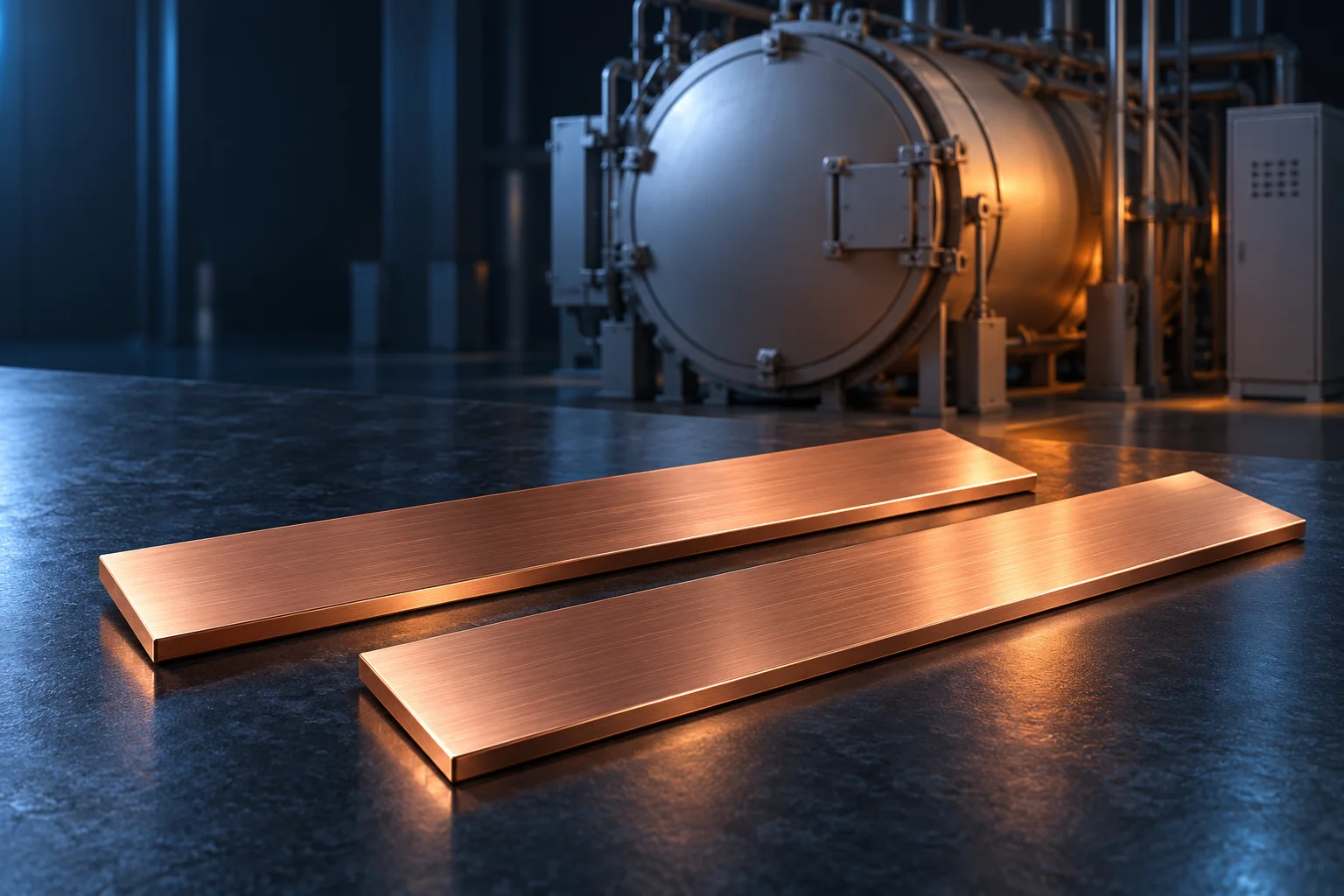
Cover is an AI-generated material/process concept, not Hongchuan equipment or defect evidence. No furnace operating recipe or material-substitution approval is provided.