


SMT SMD Busbar Selection Guide: 5 Key Differences Between Taped Copper Strips
In SMT assembly, "taped copper strips" and "taped busbars" are the two most common current-carrying devices. Many engineers get confused during selection: they look similar, both use tape packaging, so why is one called a "strip" and the other a "busbar"? This article clarifies all the differences.
一、First: What is Tape Packaging?
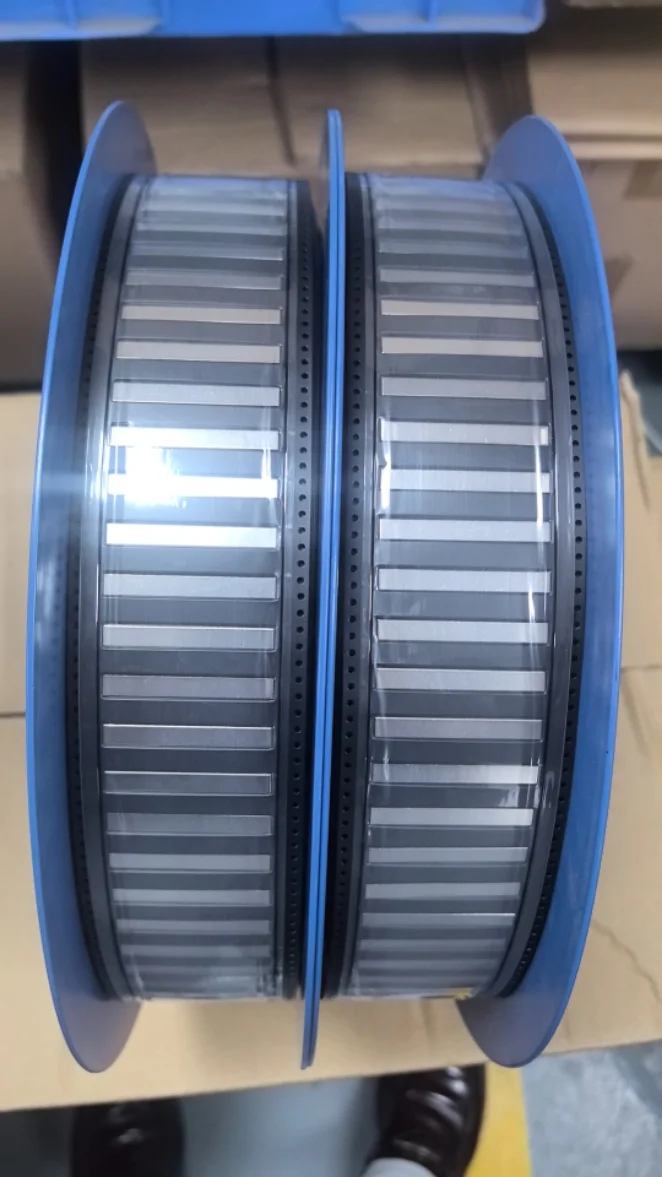
Tape & Reel is the standard packaging for SMT assembly:
- Components placed in cavity tape pockets
- Sealed with cover tape on top
- Wound on reels for automated pick-and-place
Advantages of tape packaging:
- Compatible with fully automatic SMT lines
- Fast pickup with Pick & Place machines
- Protection against static, dust, and moisture
- Standard sizes (7", 13")
二、Taped Copper Strip vs Taped Busbar: 5 Key Differences
| Dimension | Taped Copper Strip | Taped Busbar |
|---|---|---|
| Thickness | 0.1mm - 0.5mm | 0.5mm - 2.0mm |
| Width | 1.0mm - 8.0mm | 5.0mm - 30mm+ |
| Current Rating | 5A - 30A | 20A - 200A+ |
| Applications | Mobile, wearables | Energy storage, automotive |
| Terminal Type | Flat pad or gull-wing | High-current clamp/weld |
1. Thickness: 0.1mm Difference, Completely Different Applications
Taped copper strips (0.1-0.5mm): Thin and flexible, ideal for space-constrained consumer electronics.
Taped busbars (0.5-2.0mm): Rigid, current capacity 5-10x higher than strips.
Selection Formula:
Current > 30A → Prioritize taped busbars
Current < 20A, space-limited → Choose copper strips
2. Width vs Current: Wider Isn't Always Better
Copper strips are typically 1-8mm wide, suitable for low-current signal transmission or LED backlights.
Busbars can be 30mm+ wide, with thick copper foil handling 100A+ currents.
Test Data (0.5mm copper foil):
| Width | Current (10°C temp rise) |
|---|---|
| 3mm | ~15A |
| 6mm | ~30A |
| 10mm | ~55A |
| 20mm | ~120A |
3. Surface Finish: Tin vs Gold
Copper Strip Finishes:
- Tin plating (low cost, good solderability)
- Nickel plating (anti-oxidation, wear resistance)
Busbar Finishes:
- Tin (standard applications)
- Silver (high-frequency, low contact resistance)
- NiPdAu (premium automotive)
4. Terminal Structure: Flat vs Clamp
Copper strips typically have flat pad terminals, directly soldered to PCB pads.
Busbar terminals may require:
- Solder terminals: Connected to PCB pads
- Press-fit terminals: Mated with connector receptacles
- Screw terminals: Used with welding terminals
5. Packaging: 7" Reel vs 13" Reel
Copper strips are small and lightweight, typically using 7" mini-reels (1000-5000pcs).
Busbars are larger and heavier, commonly using 13" maxi-reels (200-1000pcs).
Note: Verify your pick-and-place feeder compatibility before selecting reel size.
三、Selection Process: 4 Steps
Step 1: Determine Current Requirements
Calculate normal operating current, select specs with 30%+ margin.
Step 2: Measure PCB Space
Confirm available width and height clearance.
Step 3: Confirm Soldering Process
Reflow, wave soldering, or hand solder? Choose appropriate surface finish.
Step 4: Verify Packaging Compatibility
Tape dimensions and sprocket holes must match your SMT equipment.
四、Common Mistakes
- ❌ Using strips instead of busbars → Overcurrent causes excessive temperature rise and solder joint failure
- ❌ Ignoring tape orientation → Wrong orientation during loading causes soldering defects
- ❌ Mismatched packaging specs → 13" reels won't fit 7" feeder stations
五、Conclusion
SMT busbar selection ultimately balances current, space, and process compatibility. Taped strips and taped busbars each have their place—the key is matching to your specific application.
Hongchuan Precision offers 6000+ standard products including SMD nuts, current-carrying busbars, and welding terminals. Full tape packaging support with 24-hour rapid prototyping.
📞 Free Selection Consultation: Hongchuan Precision | Phone: 18938685515
Hongchuan Precision Hardware | No.319, Yulong Road, Chang'an Town, Dongguan | Professional SMT Connection Solutions